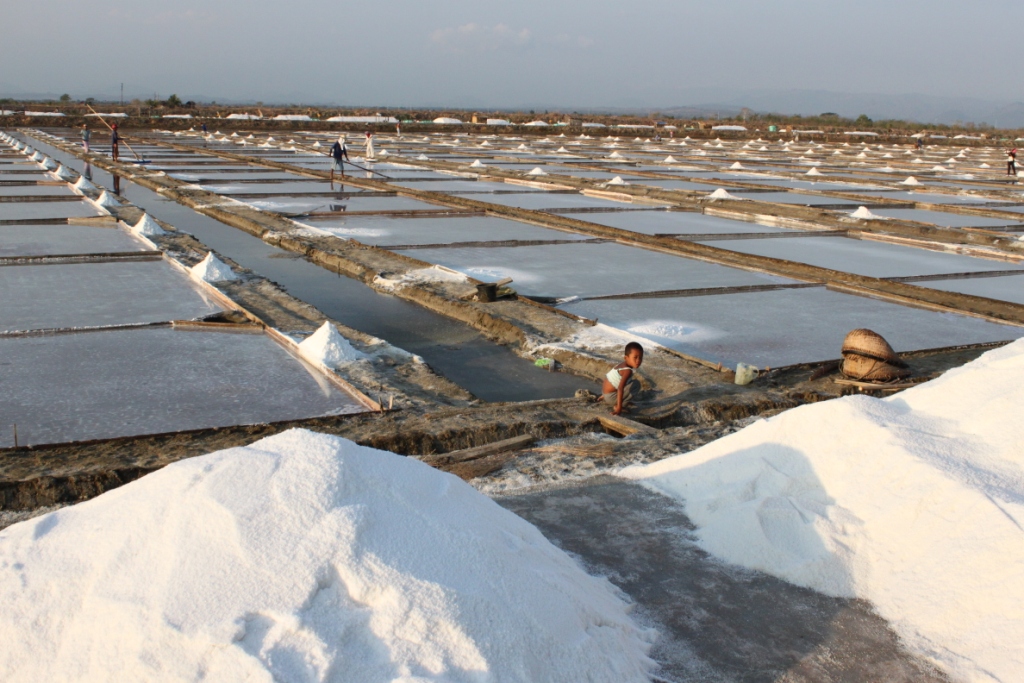
THE Bicameral Conference Committee composed of the members of the House and Senate Committees on Agriculture and Food convened to reconcile the disagreeing provisions of the House and Senate versions of the proposed Philippine Salt Industry Development Act.
Senator Cynthia Villar, Chair of the Senate Committee on Agriculture, Food, and Agrarian Reform, led the Senate contingent in the bicam, supported by Senator Bato Dela Rosa and Senator Imee Marcos. The House contingent, spearheaded by Rep. Mark Enverga, Chair of the House Committee on Agriculture and Food, included KABAYAN Partylist Rep. Ron Salo, Albay’s 2nd District Rep. Joey Salceda, AGRI Partylist Rep. Wilbert Lee, and Misamis Oriental 2nd District Rep. Yevgeny Vicente Emano.
At the onset, Rep. Enverga manifested the House’s adoption of most of the Senate provisions, except for the few provisions on the composition of the Salt Council, salt iodization requirement for food grade and artisanal salt, and tariff for salt importation.
Rep. Ron Salo, one of the principal authors and sponsors of the measure, expressed his elation on the outcome of the bicameral conference meeting.
“The collaborative session was marked by a constructive exchange of ideas and a unified commitment to address all concerns on the disagreeing provisions of the proposed Act. After all, we share the same aspiration of advancing the interests of our salt farmers and producers and the entire salt industry,” Rep. Salo remarked.
Key deliberations and agreements include designating the Department of Trade and Industry (DTI) as the Vice Chair of the Salt Council, classifying salt as an aquatic resource, providing exemptions including VAT for salt, and including Marinduque, Quezon, and Misamis Oriental as priority areas for salt production.
Crucially, the exemption of salt from mandatory iodization was outlined, encompassing artisanal salt, non-food grade salt, and salt intended for exportation. It was emphasized that domestically-produced food-grade salt will still require iodization, but it was clarified that the farmers or producers are not responsible for iodizing salt intended for food consumption. It was further clarified that artisanal salt used in food establishments, such as restaurants, and by food manufacturers will also not be required to be iodized.
“We aim to balance safety standards with industry realities. Exempting artisanal, exported, and non-food grade salt from iodization aligns with our goal to facilitate exports and preserve traditional salt-making practices while maintaining necessary health regulations for food-grade salt,” Rep. Salo explained.
At the end of the conference, the amendments resulting from the deliberations were finally approved by the conferees of both Houses of Congress, signaling a pivotal moment in advancing the salt industry’s developmental trajectory.
“With the bicam’s approval of the provisions, I am confident that the final bill seamlessly integrated the key elements of both the House and Senate versions, creating a robust framework that empowers the local salt industry,” Salo said.
“The collaborative efforts of the bicameral committee is a testament to our collective commitment to bolster the salt industry, paving the way for the sustainable development and growth of this vital sector,” Rep. Salo concluded.
The final version will soon be submitted to both Houses of Congress for ratification.
About the Author