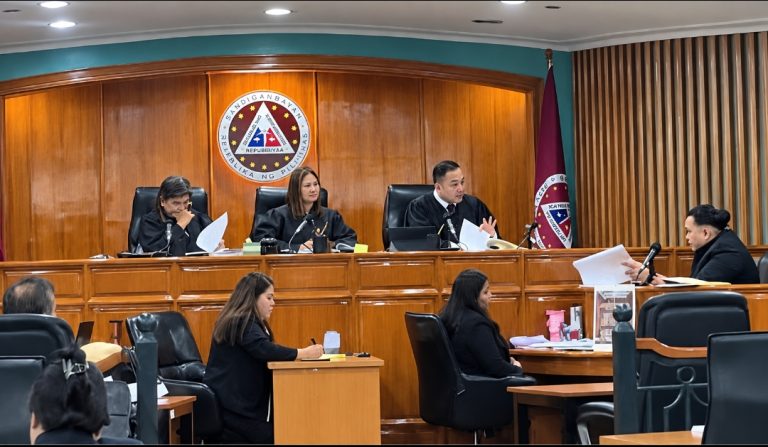
House of Representatives — Kamanggagawa Partylist Rep. Elijah “Eli” San Fernando on Wednesday welcomed the historic approval by the House Committee on Labor and Employment of the substitute bill abolishing the provincial wage rate system and establishing a single National Minimum Wage, a major step toward correcting decades of wage inequality faced by workers outside Metro Manila.
“This is a long-awaited step toward restoring dignity to labor across the country,” he said. “Parehas ang trabaho na ginagawa ng construction worker, security guard, at food service worker sa Zamboanga, Cavite, at Quezon City. It is only fair that their work be valued equally.”
The substitute measure consolidates San Fernando’s House Bill No. 94, the proposed National Minimum Wage Act, together with similar bills authored by Representatives Adrian E. Salceda, Josefina B. Tallado, Ramon N. Guico Jr., and Ramon Jolo B. Revilla III.
During the hearing, San Fernando took the floor to defend the measure against longstanding arguments that provincial wages should remain lower due to supposed differences in the cost of living.
“Punta lang kayo sa Rizal, katabi lang ng Quezon City. When you take a look at the prices of basic and prime commodities, mula itlog, karneng manok, karneng baka, karneng baboy, gulay, mantika, patis, toyo, asin, asukal, bigas, lahat yan pareho lang ang presyo. Hindi po masasabi ng kahit sinuman dito na mas mura sa probinsya. ‘Pag pinag usapan natin generally lahat ng mga pangunahing bilihin at produkto, hindi nagho-hold yung argumento ng cost of living,” he said.
San Fernando pointed out the obvious contradictions in how prices are treated nationwide.
“Pag nagtakda ang Department of Trade and Industry, hindi naman provincial rate ang suggested retail price. Pag tumaas ang presyo halimbawa ng gasolina o ng diesel, wala naman tayong provincial rate. In fact, mas mataas pa nga ang presyo ng mga produktong petrolyo sa probinsya because of the added transportation cost,” he explained.
He traced the roots of the problem to the failure of Republic Act 6727, or the Wage Rationalization Act of 1989, the very law that institutionalized the regional wage structure.
“The promise of [Republic Act 6727] is to disperse growth… But if we’re going to take a look at the data, since 2001 to 2024, gross domestic product rose to almost triple, labor productivity almost doubled. Pero ‘pag tinignan natin yung real wages ng mga manggagawa, halos hindi gumalaw,” he stressed.
Instead of promoting development in the countryside, San Fernando argued that the law locked workers and local economies into stagnation, decrying the “self-fulfilling prophecy” of the argument that opportunities are limited in the countryside.
“Talagang napag-iiwanan yung mga nasa probinsya natin dahil sa limitasyon na ini-impose ng RA 6727 doon sa kakayahan ng mga manggagawa na kumita, na hanggang dito lang ang inyong purchasing power,” he said. “Dahil hanggang diyan lang yung purchasing power niyo, hindi uunlad yung lokal na ekonomiya dahil walang kapasidad yung manggagawa na bumili ng serbisyo at produkto. So it’s a self-fulfilling prophecy.”
The Committee’s approval now clears the path for the adoption of the Committee Report, which is scheduled for February 4, 2026, before the bill advances to plenary deliberations. As the consolidated bill moves forward, San Fernando pledged to continue pushing for its passage into law.
“This fight is far from over,” he said. “But today, we proved something important: after 36 years, the walls of wage discrimination are finally starting to crack.”
About the Author