THE Second Congressional Commission on Education (EDCOM II) has flagged a critical geographic imbalance in the country’s publishing industry that continues to delay the delivery of learning materials to millions of students, threatening to undermine recent administrative breakthroughs in the education sector.
Recently, the Department of Education (DepEd) has reported its success in breaking the decade-long gridlock in textbook procurement, a feat EDCOM II has commended as a significant step forward since 2013. In 2024 alone, DepEd delivered over 87 million textbooks and procured more than 100 new titles—a stark contrast to the mere 27 titles procured over the entire preceding decade. Through reforms such as Early Procurement Activities (EPA), the agency slashed the procurement timeline from 210 days to just 60 calendar days. A recent study by the Philippine Institute for Development Studies (PIDS) however cautions that further reforms may be necessary to address the broken supply chain on the ground.
Citing the PIDS study “DepEd’s Book Supply Chain: Issues, Challenges, and Ways Forward”, EDCOM II highlighted in its Final Report, Turning Point: A Decade of Necessary Reform (2026-2035), cited that the production of textbooks remains heavily concentrated in Luzon, leaving vast areas of the Visayas and Mindanao with virtually no local publishing capacity, with data showing that most National Book Development Board (NBDB)-registered book enterprises are clustered in the National Capital Region. The report identified specific “publishing desserts,” noting that most northern provinces in the Visayas have zero publishing-related enterprises, while the entire island group of Mindanao hosts only a handful of publishers and printers.
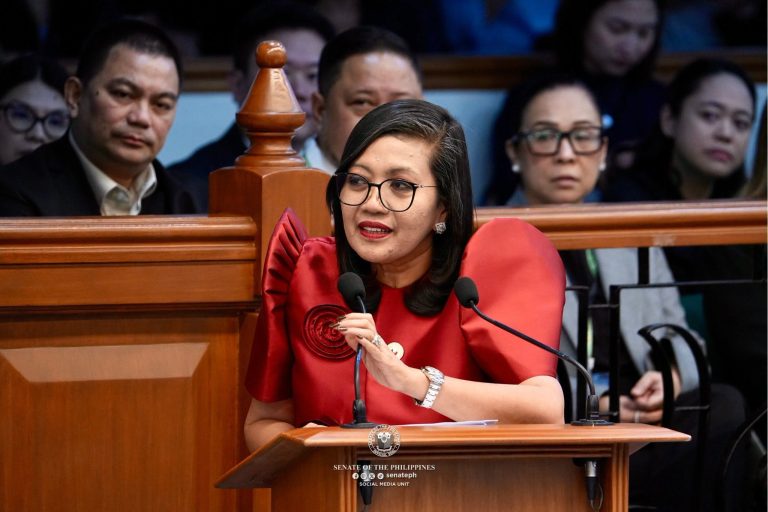
EDCOM II Co-Chairperson Senator Loren Legarda emphasized that this spatial inequality directly translates to learning disadvantages for students in the provinces.
“We cannot allow geography to dictate a child’s access to quality education. While we commend the DepEd for finally securing the textbooks, the concentration of publishing hubs in Luzon has historically left millions of learners in the Visayas and Mindanao waiting for months, sometimes years, for materials that are essential to their learning. We must decentralize this industry and support the growth of local publishers in order to ensure that every student, regardless of where they live, has a textbook on their desk on the first day of school,” Senator Legarda stated.
Under Republic Act 8047 or the Book Publishing Industry Development Act of 1995, the National Book Development Board was established to “to create conditions conducive to development, production, and distribution of books, especially the acquisition and adoption of state-of-the-art technology, equipment and machinery for book publishing” and “to create conditions conducive to development, production, and distribution of books, especially the acquisition and adoption of state-of-the-art technology, equipment and machinery for book publishing”.
This abolished DepEd’s Instructional Materials Development Center with the specific intent of cultivating a robust local publishing sector. Yet, nearly 30 years later, the industry remains characterized by market concentration. Senate hearings revealed that in the latest DepEd bidding, only 10 publishers won all 60 lots in the latest DepEd bidding, evidencing structural barriers that prevent broader participation from regional players. This lack of regional capacity forces DepEd to rely on long, multi-stage logistics chains where textbooks must cross two to four islands before reaching remote schools, a process highly vulnerable to weather and port delays. Based on a 2024 study commissioned by EDCOM 2, “Options for Improving DepEd Procurement for Textbooks, TVL Resources, and Assessment Services” by Malaluan and Maribojoc, delivery of textbooks could go from 10 months, to as long as 14 months.
EDCOM II Executive Director Dr. Karol Mark Yee stressed that the need to fulfill the intents of RA 8047, “The role of NBDB in helping us address this literacy crisis is fundamental: first, in ensuring that all Filipinos have “adequate, affordable, and accessible supply of books”, and second, that we are able to support “indigenous authorship and of translations among various language groups in the country” — these two mandates are essential so that our learners not only have access to quality books, but especially for our youngest children, are in their mother tongues.”
“Moving forward, we urge the NBDB to work closely with DepEd, so that learner needs are prioritized strategically, book supply chains are fixed, and quality local books and publishers are supported and are accessible in every part of our country,” he continued.
EDCOM II’s National Education Plan (NatPlan) targets achieving and maintaining a 1:1 textbook-to-student ratio for all elementary learners as a critical component of developing functional literacy. Specifically, the plan aims to reach 100% textbook coverage for all projected 14.7 million elementary learners by 2028, a standard that is to be sustained through 2031 and 2035 while ensuring the delivery of updated materials according to DepEd’s five-year cycle.
About the Author