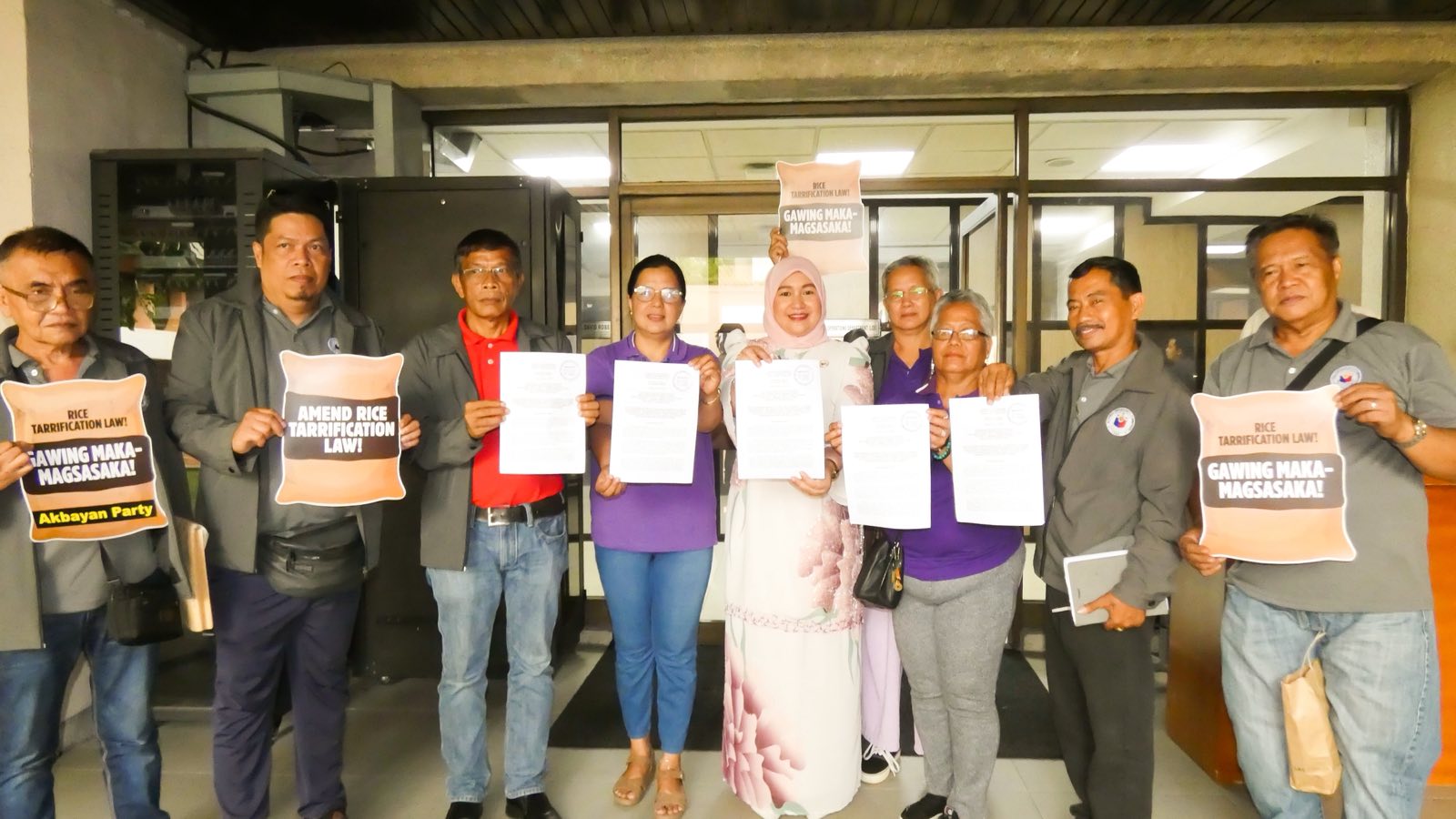
AKBAYAN Rep. Dadah Kiram Ismula led the Akbayan Reform Bloc on Monday in filing a bill to further amend the Agricultural Tarrification Act, aiming to end the exploitation of local producers by agricultural cartels.
Timed with Fisherfolk and Farmers’ Month, Rep. Ismula stated that six years under the current framework failed to deliver affordable prices of rice or a modernized local industry, leaving small farmers disadvantaged.
“Tapos na ang maliligayang araw ng mga cartel, ibalik natin ang kapangyarihan sa gobyerno, sa National Food Authority, para pangalagaan ang ating mga magsasaka,” Akbayan Rep. Dadah Kiram Ismula said.
“Anim na taon na ang nakalipas noong ipasa ang RTL. Ang pangako sa atin noon: kapag binuksan ang merkado sa imported na bigas, bababa ang presyo para sa mamimili, at uunlad ang lokal na industriya,” Rep. Ismula said. “Pero ano ang naging totoong realidad? Ang naging biktima ay ang ating mga magsasaka at ang sikmura ng bawat pamilyang Pilipino.”
The proposed amendments seek to restore the National Food Authority’s mandate to stabilize rice prices, buy palay directly from farmers, sell subsidized rice during emergencies, among others.
The bill also ensures civil society and farmer organizations’ active participation in the formulation of the Rice Industry Roadmap.
“Hinding-hindi tayo papayag na magpatuloy ang ganitong sistema. Ang inihain nating amiyenda ay may malinaw na layunin: bawiin ang kontrol sa ating pagkain mula sa mga kartel at ibalik ito sa kamay ng pamahalaan at ng mga mamamayan.”
The Farmers and Landless Rural Workers Sector of the National Anti-Poverty Commission (NAPC) expressed support for the Akbayan-sponsored measure, calling for its immediate passage to address rising input costs and import dependency.
“We firmly believe that the immediate passage of this proposed measure must be treated as a national priority in order to genuinely protect the welfare, livelihood, and long-term sustainability of Filipino farmers and rural agricultural workers,” the NAPC sector stated, adding that policies must prioritize fair farm-gate prices and give the sector an institutionalized role in policy oversight to prevent administrative irregularities.
About the Author