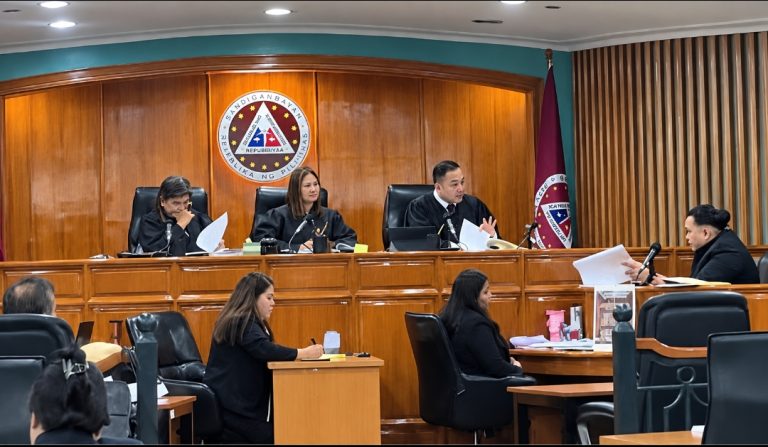
FOLLOWING a string of violent incidents in schools, the Senate Committee on Basic Education on Wednesday, led by its Chairperson Sen. Bam Aquino, advanced discussions on a proposed School Safety Act, which seeks to institutionalize a comprehensive approach to preventing school violence.
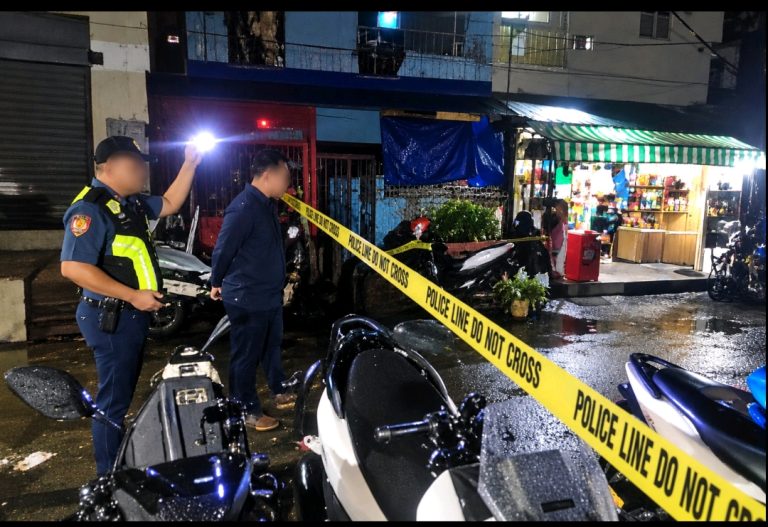
The hearing comes in the wake of recent incidents, including the school shooting in Tacloban City, stabbings in Cavite, and other cases of violence involving students in other parts of the country, prompting the Senate to examine whether existing laws remain adequate to protect learners.
Opening the hearing, Aquino, who also serves as Co-Chairperson of EDCOM 2, stressed that ensuring safe schools requires the participation of the entire community and not just schools alone.
“Ang school safety ay hindi lamang responsibilidad ng DepEd o ng paaralan. Responsibilidad po ito ng buong bansa: ng mga magulang, ng komunidad, at higit sa lahat, ng bawat isa sa atin”, he said.
The proposed legislation seeks to establish a comprehensive school safety framework by strengthening campus security, institutionalizing emergency response protocols, improving access to mental health and psychosocial support, and enhancing coordination among schools, local governments, law enforcement agencies, parents, and communities.
The Second Congressional Commission on Education (EDCOM 2) also presented their recommendations to strengthen the proposed measure, including requiring annual School Safety Plans in every school, establishing early identification and intervention systems for learners exhibiting behavioral or psychosocial risks, integrating social-emotional learning and digital safety into the curriculum, and ensuring trauma-informed mental health and psychosocial support following critical incidents.
Fast-tracking 10,000 School Counselor Associates
Recognizing that early intervention depends on adequate learner support, the Committee also reviewed the implementation of the Basic Education Mental Health and Well-Being Promotion Act, which allocated Php 2 billion this year for the hiring of 10,000 School Counselor Associates (SCAs).
Senate President Sherwin Gatchalian, citing a previous EDCOM 2 study with De La Salle University, said that incidents of violence are more prevalent in highly congested schools, underscoring the importance of deploying guidance personnel where they are needed most.
“Napapansin namin na sa mga highly congested schools, mas marami ring incidents of violence. Kaya mahalaga na ma-deploy natin ang ating School Counselor Associates sa mga paaralang ito. Under the law, ang School Counselor Associates puwedeng psychologists kasi kulang nga tayo ng registered guidance counselors sa Pilipinas… For this year, magha-hire tayo ng 10,000 School Counselor Associates. Ang tanong ko, how far are we now in hiring the 10,000?”
Responding to the committee, DepEd Undersecretary Wilfredo Cabral said that since the Civil Service Commission has already approved the Qualification Standards for the positions, the Department had shortened its hiring process from three months to a maximum of 35 days to accelerate deployment.
“In our recent ExeComm, we proposed, and Secretary Sonny Angara approved, a compressed timeline for the hiring of SCAs. Normally, the hiring takes about three months, but we compressed it to 35 days maximum. We’re looking forward that by September, we’ll be able to deploy the 10,000 SCAs across our 45,928 schools.”
EDCOM 2 Executive Director Dr. Karol Mark Yee said the deployment of School Counselor Associates should be complemented by stronger school-based prevention mechanisms, including empowering class advisers to identify learners at risk before problems escalate.
“We also need to empower class advisers to identify and monitor learners exhibiting behavioral, psychosocial, or safety risks by giving them sufficient teaching load for this purpose and removing from them other non-teaching tasks.”
Aquino said the proposed legislation ultimately aims to move the country from reacting to school violence to preventing it through a coordinated national framework implemented at the local level.
“The way we’re crafting the law is that there has to be a mother policy. A school safety framework that will then be localized and headed by DepEd. Iba-iba rin ang sitwasyon at konteksto ng ating mga paaralan, pero pare-pareho pa rin silang may aspeto ng school safety na kailangang tugunan. Kaya ang gusto nating mangyari ay magkaroon ng comprehensive national school safety framework at localized school safety plans na nakaayon dito pati na rin ang pagkakaroon ng mga preventive measures at malinaw na emergency protocols”, Aquino said.
About the Author