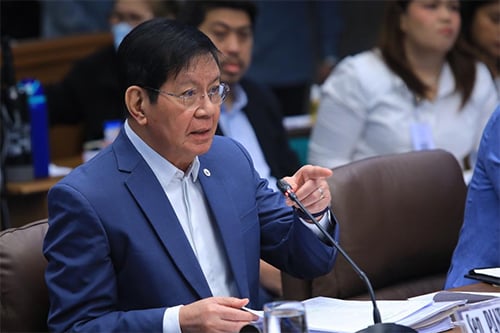
Amid the continuing surge in rice prices and growing calls from farmers’ groups and consumer advocates to restore the regulatory and market intervention powers of the National Food Authority (NFA), House Deputy Minority Leader and Mamamayang Liberal (ML) Party-list Rep. Leila de Lima has filed a measure seeking a comprehensive review of Republic Act No. 11203, or the Rice Tariffication Law.
In filing House Resolution No. 645, De Lima underscored the need for a systematic review of the implementation of the Rice Tariffication Law to determine appropriate policy interventions to lower rice prices and ensure food security.
The Resolution shall assess the proposed restoration of NFA powers, identify effective safeguards against potential abuses, inefficiencies, or market distortions, and ensure transparency and accountability in its operations.
“The price of rice has continued to rise, negatively impacting the livelihoods of farmers and placing a significant burden on the household budgets of millions of families, particularly those in the most vulnerable sectors of society,” De Lima stressed.
“The current market-led approach, while intended to foster competition and reduce prices, has seemingly failed to consistently deliver affordable rice to consumers, with recent price surges indicating potential market inefficiencies, speculative activities, possible illegal acts of price manipulation, or supply chain weaknesses,” she added.
RA 11203 which was enacted in 2019 imposes farmer protection tariffs on rice imports in lieu of quantitative restrictions with the goal of lowering rice prices, limiting the functions of the NFA primarily to buffer stocking for emergency and disaster relief.
Prior to the enactment of the Rice Tariffication Law, the NFA possessed extensive regulatory and market intervention powers, including direct rice importation, price stabilization through strategic buying and selling, and the setting of price ceilings and floors, which aimed to protect both consumers from exorbitant prices and farmers from exploitative farmgate prices.
According to the Bicolana lawmaker, a strengthened NFA, with effective safeguards, could potentially: (1) implement a more proactive price stabilization program by managing supply and influencing market prices; (2) ensure a stable and affordable supply of rice, especially for low-income households; (3) provide a more robust buffer stock that can quickly respond to supply shortages and emergencies; (4) support local rice farmers by offering competitive farmgate prices for their produce, thereby incentivizing domestic production; and (5) counteract potential hoarding, profiteering, and cartelistic practices by unscrupulous traders.
“Kung hindi natutupad ang magandang layunin ng umiiral na batas at nakakadagdag pa sa mabigat nang pasanin ng ating mga magsasaka at consumers, hindi na dapat magpatumpik-tumpik pa ang Kongreso na amyendahan ito at maglatag ng mas epektibong mekanismo para makatulong sa ating mga nangangailangang kababayan,” De Lima said.
“Malinaw na hindi tayo dapat nakaasa sa importasyon para mapababa ang presyo ng bigas, mapataas ang kita ng ating mga magsasaka, at maabot ang seguridad sa pagkain. Kailangan ng mga magsasaka ng proteksyon mula sa mapang-abusong mga traders, lalong-lalo na ang sapat na suporta ng gobyerno mula sa pagbubungkal ng lupa, sa pagtatanim at pag-ani, hanggang sa paghahatid ng produkto sa merkado,” she added.
About the Author