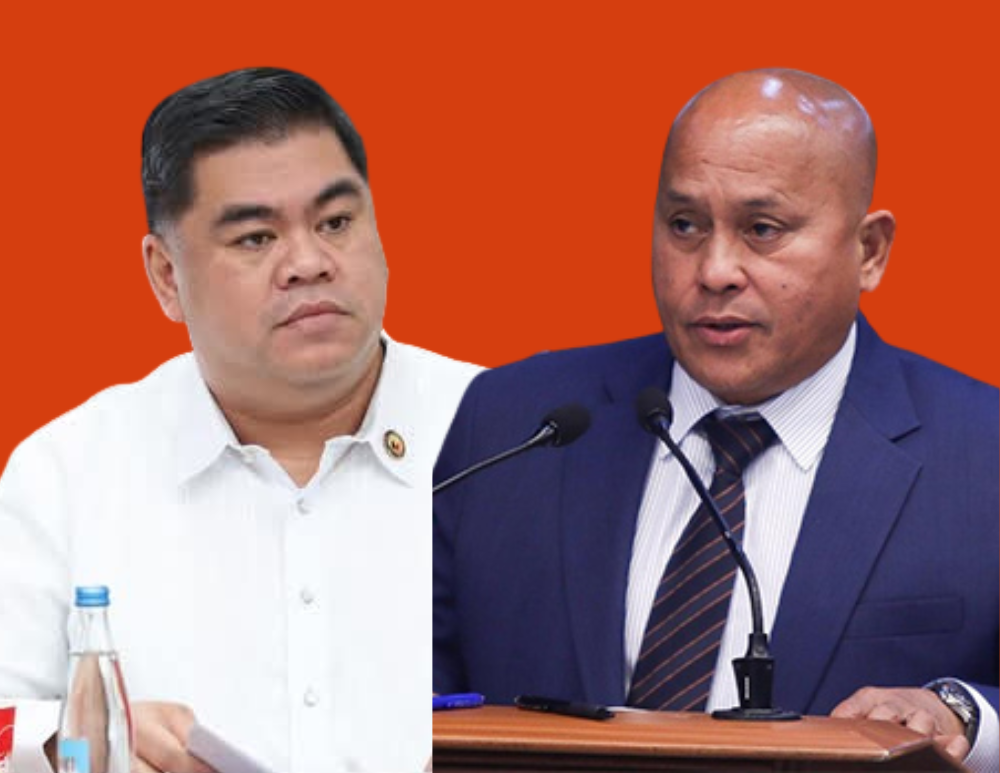
SENATOR Ronald “Bato” dela Rosa’s criticism of Tingog Party-list and its participation in a health development project may be intended to hide his accountability in extrajudicial killings linked to the war on drugs during the Duterte administration.
House Assistant Majority Leader and Tingog Party-list Rep. Jude Acidre made the statement in reaction to the senator’s privilege raising ethical and political issues in the health development memorandum agreement (MOA) signed by Philhealth, Development Bank of the Philippines and Tingog.
Acidre also questioned the timing and intent of the senator’s remarks.
“It is worth asking why Senator Dela Rosa is so fixated on attacking this program, which is designed to uplift underserved communities,” he said.
“Could this be an attempt to deflect attention from the House investigation into extrajudicial killings during his time as Philippine National Police chief?”he asked.
He said Dela Rosa’s “sudden concern for governance and ethics appears more like a smokescreen to distract from his own accountability issues than a genuine critique of the MOA.”
Acidre called on Dela Rosa to recognize the true purpose of the initiative.
“Instead of politicizing a well-intentioned initiative, Senator Dela Rosa should focus on addressing the lingering questions about his past and how it has affected the lives of countless Filipinos. Tingog, for its part, remains committed to serving the people, especially those in rural areas who have long been neglected,” he said.
He said the senator is “misinformed” on Tingog’s involvement in the health development project are his criticisms “are troubling in the light of his history and motives.”
He said the program “aims to address dire gaps in healthcare infrastructure, particularly in rural and underserved areas.”
“Tingog Party-list’s participation in this initiative is rooted in its mission to improve access to healthcare, especially in underserved and rural communities. This initiative is not about power or control but about facilitating solutions for local government units (LGUs) to enhance public healthcare services,” he stressed.
Acidre explained that the MOA outlines Tingog’s role in supporting LGUs by helping them access DBP’s financial mechanisms, providing “fiscal training, capacity building and other initiatives to enable local government units access DBP’s credit facility,” and extending “direct medical assistance” to patients.
He added that Tingog’s involvement is strictly facilitative and does not infringe on the mandates of government agencies.
“Tingog Party-list does not handle funds, manage projects, or encroach upon the functions of the Department of Health (DOH) or the Department of the Interior and Local Government (DILG). These agencies remain central to national healthcare programs,” he stressed.
He also responded to Dela Rosa’s assertion that the MOA bypassed some concerned agencies, including the Department of Health.
“The MOA does not bypass these agencies. Tingog complements, not replaces, their mandates,” the Tingog lawmaker said.
On politicization and legality issues, he said, “Tingog’s involvement is grounded in service, not politics. The MOA adheres to all legal protocols. The financial arrangements are strictly between DBP and LGUs, and no funds are transferred to Tingog. The ethics of this partnership should be measured by its intent and outcomes, not by Dela Rosa’s baseless speculations.”
“We call on the public to see through this distraction and focus on what truly matters: ensuring that healthcare reaches every Filipino, regardless of political noise. Public service should always prioritize the welfare of the people, not personal or political agendas,” Acidre said.
About the Author