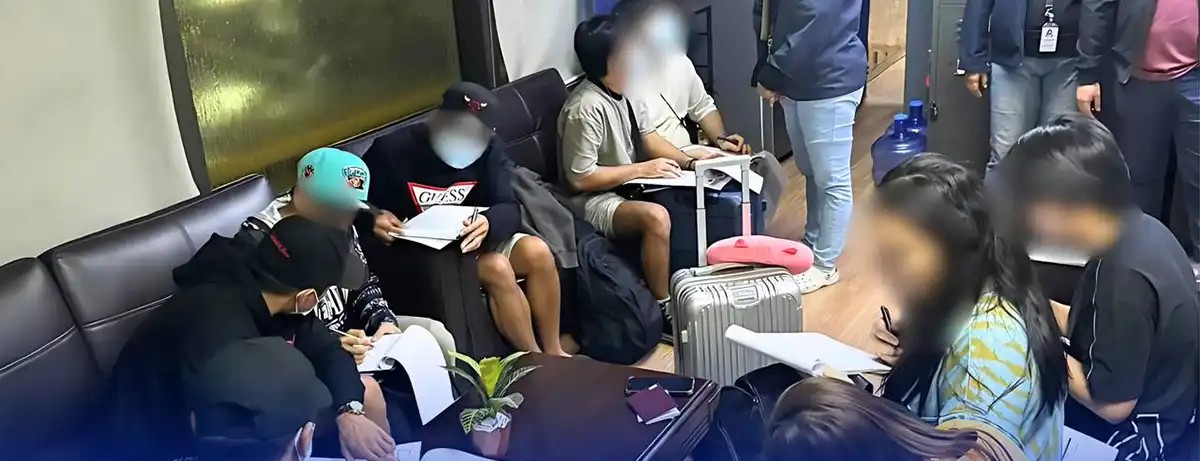
TEN (10) Filipino trafficking victims arrived at Ninoy Aquino International Airport (NAIA) Terminal 1 last September 7, following their repatriation from Cambodia, where they were forced to work in an illegal scam hub under abusive conditions.
The repatriation underscores President Ferdinand “Bongbong” Marcos Jr.’s strong commitment to intensify the fight against human trafficking and to ensure that Filipino victims receive timely assistance, protection, and justice.
According to the Bureau of Immigration’s (BI) Immigration Protection and Border Enforcement Section (I-PROBES), the repatriated individuals arrived from Phnom Penh, Cambodia, and included six in their late twenties, three in their mid-thirties, and one aged 65.
The victims recounted that they were lured out of the country on different dates by traffickers they had met online, with 8 of them leaving under the false pretense of traveling as tourists. Two of them departed as overseas workers, but were tricked by their recruiter.
Upon arrival in Cambodia, their foreign employer confiscated their passports and forced them to work as online scammers involved in romance and investment fraud schemes.
Some of the victims revealed that they were forced to pay a penalty of USD 6,000-8,800 for refusing to participate in the scam operations. They described brutal working conditions—including torture for failing to meet daily quotas, confinement within the compound, and punishment by being forced to stand for up to 15 hours without rest.
Immigration Commissioner Joel Anthony Viado said that the Philippine Embassy in Cambodia acted promptly upon receiving the victims’ plea for help, leading to their safe and timely repatriation.
“It is appalling that these Filipinos said no to abuse —and were punished for it. Pinagmulta, pinahirapan, at ikinulong,” said Viado. “We remain steadfast in our mission to protect every Filipino from falling victim to trafficking. Through enhanced immigration checks, inter-agency coordination, and public awareness, we aim to prevent these crimes and bring perpetrators to justice,” he added.
After completing immigration procedures, the victims were provided post-care services by the Department of Social Welfare and Development (DSWD). They were then endorsed to the Inter-Agency Council Against Trafficking (IACAT) for assistance in filing legal cases against their recruiters.
About the Author