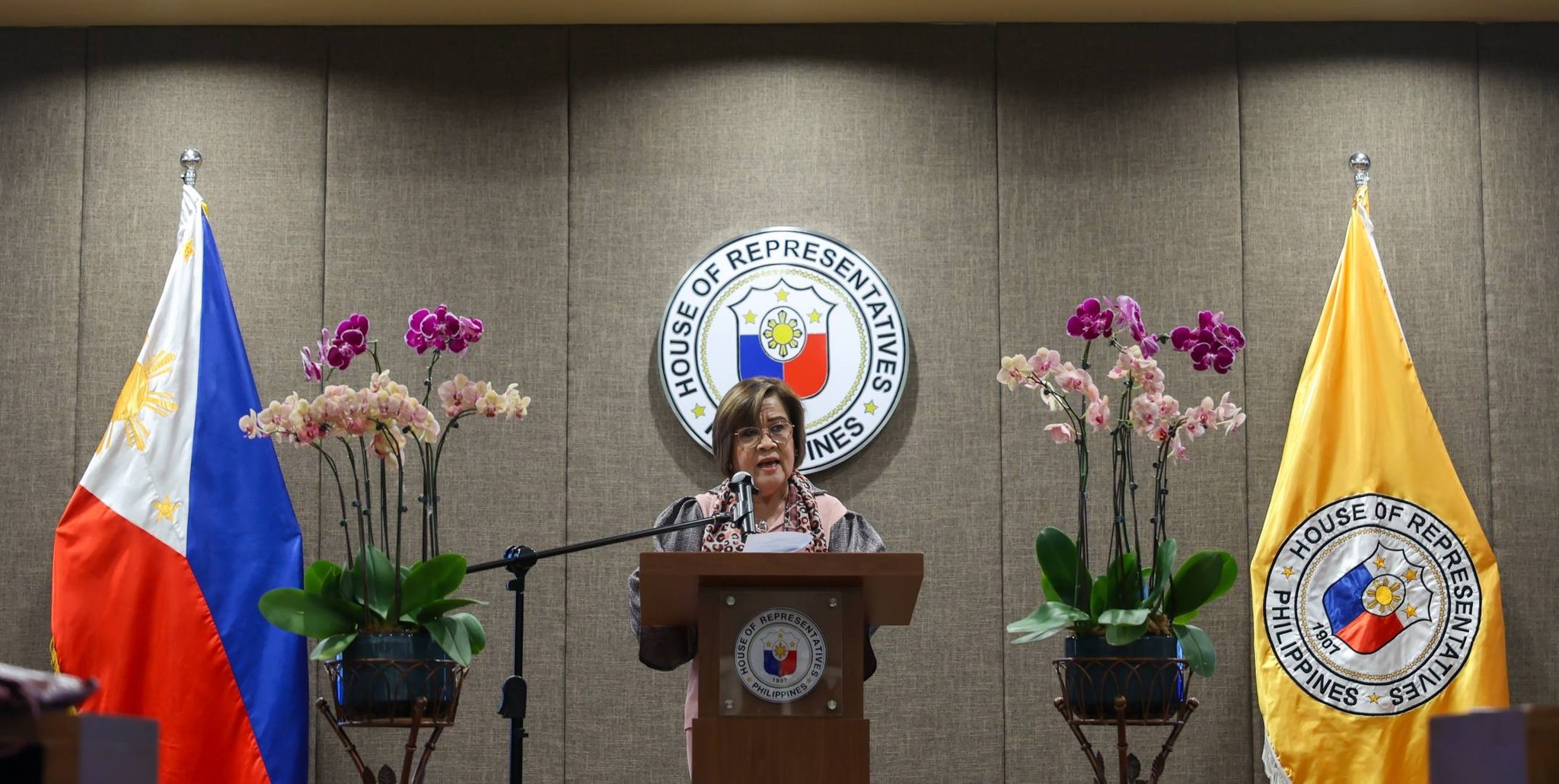
HOUSE Deputy Minority Leader and Mamamayang Liberal (ML) Rep. Leila M. de Lima renewed her call to completely remove Unprogrammed Appropriations (UA) from the National Budget, stressing that these should no longer be included at all.
“Hindi lang dapat bawasan, hindi lang dapat i-zero. Dapat tanggalin na ang unprogrammed appropriations,” De Lima said, underscoring her position that the continued presence of UA in the budget undermines fiscal transparency and accountability.
This was the statement of House Deputy Minority Leader and Mamamayang Liberal (ML) Rep. Leila M. de Lima as she renewed her call to stop including Unprogrammed Appropriations (UA) in the National Budget.
“Bagamat binawasan na sa Senate version yung unprogrammed appropriations, meron pa rin. But there should be no place in the budget for the so-called unprogrammed appropriations. It’s unconstitutional,” De Lima said.
“As we learned, funding for the reported anomalous flood control projects came from UA. Alisin na dapat ito para matigil na ang pagiging pugad nito ng katiwalian,” she added.
In the House General Appropriations Bill (GAB), UA amount to P243.22 billion. The Senate reduced it to P174.55 billion, or 28.23% lower than the House version.
It can be recalled that De Lima voted NO on the proposed 2026 House General Appropriations Bill on October 13 due to the inclusion of UA in the budget.
The Bicolana lawmaker cited three reasons for opposing UA.
“Una, unprogrammed appropriations have no definite source of financing. Walang tiyak na pagkukunan na koleksyon ng buwis o utang para dito. Kung wala palang pera ay bakit magbabalak na gumasta?” De Lima previously said.
“Pangalawa, the practice of having Unprogrammed Appropriations is tantamount to undue delegation of legislative power to the Executive. At pangatlo, nagiging parkingan ang Unprogrammed Appropriations ng mga dapat naman ay obligadong gastusin ng gobyerno,” she added.
Relatedly, in his 33-page concurring and dissenting opinion on the P60-billion Philippine Health Insurance Corporation (PhilHealth) fund transfer to the National Treasury, Supreme Court Associate Justice Ramon Paul Hernando said: “At the core of this controversy lies an undeniable truth: Unprogrammed funds in the GAA are unconstitutional. They create an unregulated space where discretion replaces discipline and where the temptations of greed and corruption inevitably find room to operate.”
“Instead, unprogrammed appropriations should be legislated through a special appropriations law,” he added.
According to De Lima, crucial items such as Foreign-Assisted Projects (FAP) should be listed under programmed funds, not under UA.
“Napakahalaga ng Foreign-Assisted Projects dahil nga may foreign counterpart ito, kaya dapat pinopondohan talaga ito. The rest should be applied for funding through a special appropriations, with a Treasurer’s certificate of availability of funds attached, filed with Congress. That is the proper and Constitutional way,” she said.
“And I’m also thinking of coming up with a law on that. Kailangan meron nang automatic appropriations for the funding of a Foreign-Assisted Project, kaysa naman ililista lang sa unprogrammed appropriations ang item na ito.”
“Again, I firmly believe: Hindi lang dapat i-zero, kundi dapat ay NO, NO – wala na dapat unprogrammed funds sa National Budget,” she added.
About the Author