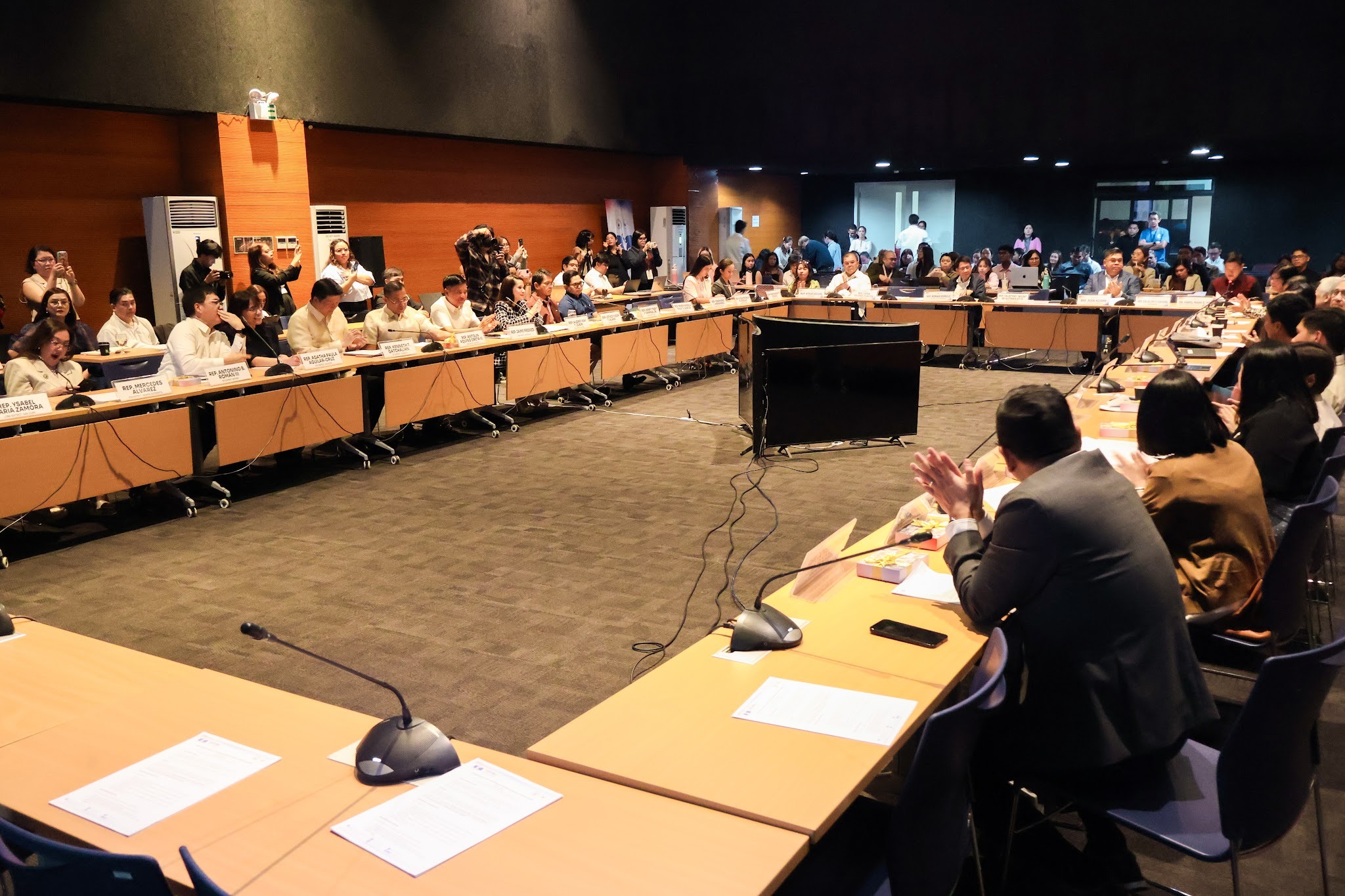
MORE than 30 members of the House of Representatives from across political parties today formed the Congressional Alliance for Philippine Education (CAPE), a coalition committed to advancing education reforms beyond political cycles and affiliations.
The Alliance was launched during the Congressional Forum organized by the Second Congressional Commission on Education (EDCOM 2) at the University of the Philippines Bonifacio Global City. By signing a Statement of Commitment, lawmakers pledged to work together to advance priority education legislation, protect funding for critical education programs, strengthen congressional oversight, and engage regularly with schools, local governments, researchers, and civil society.
CAPE brings together legislators from different regions and political parties around one shared goal: improving education outcomes for Filipino learners. The Alliance seeks to ensure that reforms are sustained over the next decade, regardless of changes in leadership or administration.
The Alliance serves as the legislative pillar of the broader Philippine Education Reform Movement (PERM), a multisectoral initiative designed to carry forward the education reform agenda outlined in EDCOM 2’s Final Report and the National Education Plan 2026–2035. Through PERM, legislators will work alongside universities, civil society organizations, local governments, educators, and development partners to ensure reforms remain evidence-based, adequately funded, and responsive to the realities in schools and communities.
EDCOM 2 Co-Chairperson and House Committee Chair on Higher and Technical Education, said the coalition was created to solve one of the country’s biggest challenges in education reform: sustaining momentum beyond changing political leadership.
“A child who entered kindergarten this year will finish senior high in 2039. By then, they have passed through three administrations, the last of this one, the next six, and then the remaining early part of the presidency after the next. Us in congress, we continue to plan from within a three-year end date; and I think that is a significant structural problem that we must address. A long-term agenda that’s being proposed by EDCOM 2 cannot depend on having individual champions whose terms and positions change,” said Acidre.
“Through CAPE, Congress is given an additional platform where legislators can actively provide leadership in pushing for an education agenda that is guided by on-the-ground evidence from institutions and researchers, and collaboration from national agencies and local government units that will translate legislation to properly implemented policies—with the singular mission of providing quality education that is accessible to all Filipino learners,” said EDCOM 2 Co-Chairperson Roman Romulo
Under the Alliance, members will work together on legislation, budget advocacy, and congressional oversight while participating in policy briefings, school visits, and consultations with teachers, school leaders, parents, learners, researchers, and local governments. These activities aim to ensure that laws and budgets are informed not only by research, but also by the realities faced by communities across the country.
As part of the initiative, EDCOM 2 also announced the establishment of the Congressional Education Policy Academy (CEPA) in partnership with the University of the Philippines Center for Education and Development (CEDEV). The Academy will provide professional development for congressional staff from both the House of Representatives and the Senate to strengthen Congress’ capacity to craft evidence-based education legislation and conduct effective policy oversight.
Membership in CAPE is voluntary and remains open to incumbent legislators from both chambers who support sustained education reform. Founding members committed to working across political parties, committees, and regions, recognizing that improving education requires long-term collaboration rather than short-term political alignment.
About the Author