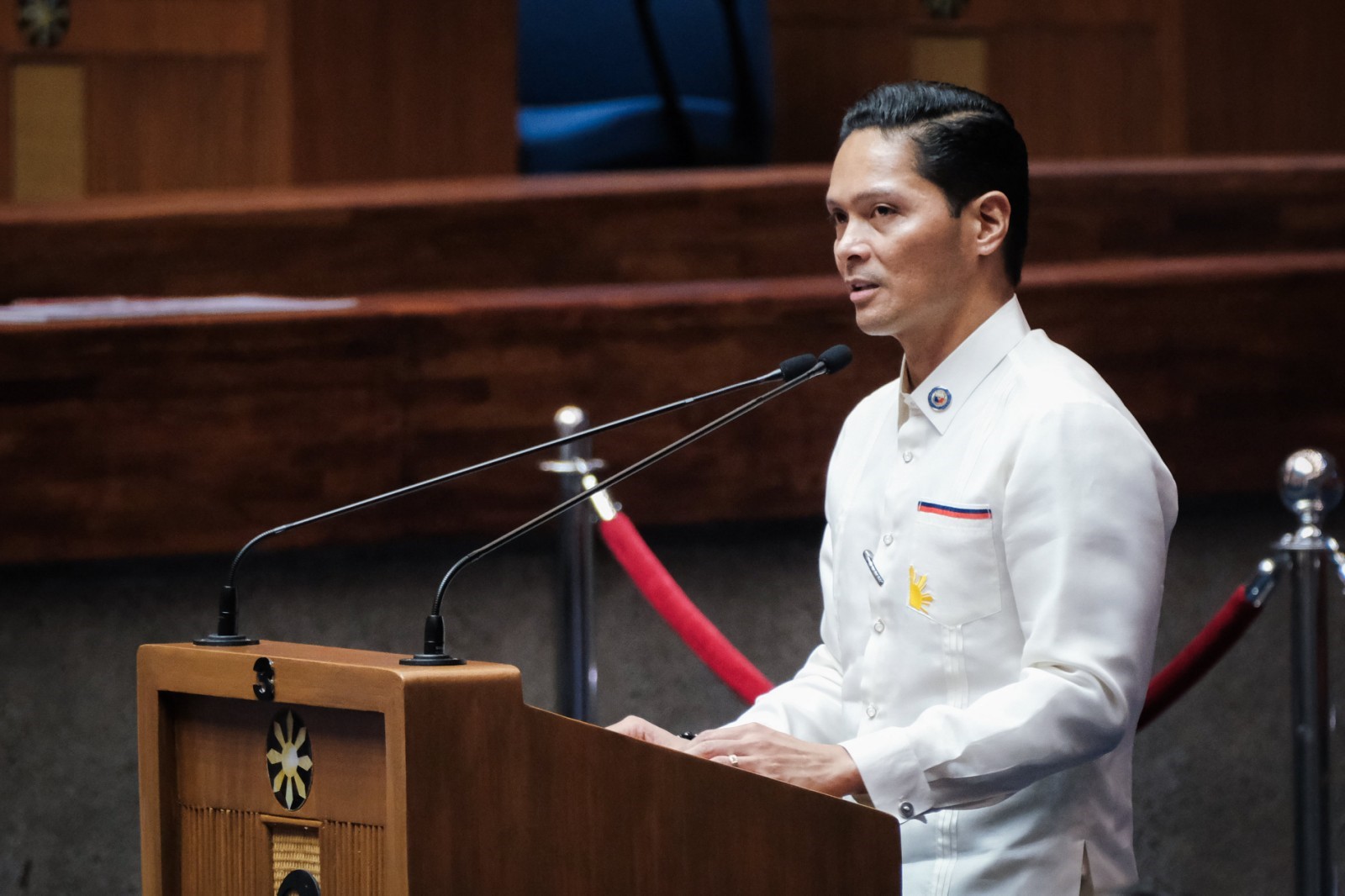
THE House of Representatives, during its plenary session on 20 May 2024, finally approved on Second Reading, House Bill (HB) No. 102: An Act Providing for Funeral Services to Indigents, and Appropriating Funds Therefor. Principally authored by Deputy Speaker and Cebu 5th District Representative Vincent Franco “Duke” D. Frasco, the HB No. 102, to be known as the “Affordable Funeral Service Act”, aims to alleviate the burden carried by grieving Filipino families, especially those living in abject poverty.
The bill proposes that all funeral establishments shall at all times make available for the family of a deceased indigent and extremely poor individual, funeral services with a price of not more than Twenty Thousand Pesos (P20,000). For this amount, the family of the deceased may avail of funeral services that include, among others, mortuary services, the provision of casket or coffin to hold the deceased, and other related services. It also mandates the Department of Trade and Industry (DTI) to monitor and regulate the prices of funeral services, while the Department of Social Welfare and Development (DSWD) may extend funeral/burial or financial assistance to qualified applicants.
In his sponsorship speech, Cong. Frasco said that this legislation touches upon the life of every Filipino. With the cost of dying in the Philippines exacerbating the situation of many Filipino families who are burdened with the unconscionable funeral expenses, he calls for a legislative intervention to heed the cry of families grieving the death of a loved one while being driven to financial distress and even debt.
HB No. 102 took inspiration from when Cong. Frasco was still serving as Mayor of Liloan in the Province of Cebu and even when he is already the Representative of the Cebu 5th District, where he has often times encountered families who has just lost their loved and were in severe distress because they could not afford the funeral services being offered by funeral establishments.
According to Cong. Frasco, this proposed legislation is one not merely of regulation, but also, most importantly, a matter of social justice. “By passing the Affordable Funeral Service Act, the dignity of every Filipino is upheld, no matter the income class, and, equitable access to affordable funeral services is assured, alleviating the pain and sorrow that inevitably comes with death.”
As he further stated, “therein lies the great injustice that the State must correct, if it is to uphold its duty, to protect the human dignity that every Filipino is entitled to, in life and, in death.”
About the Author