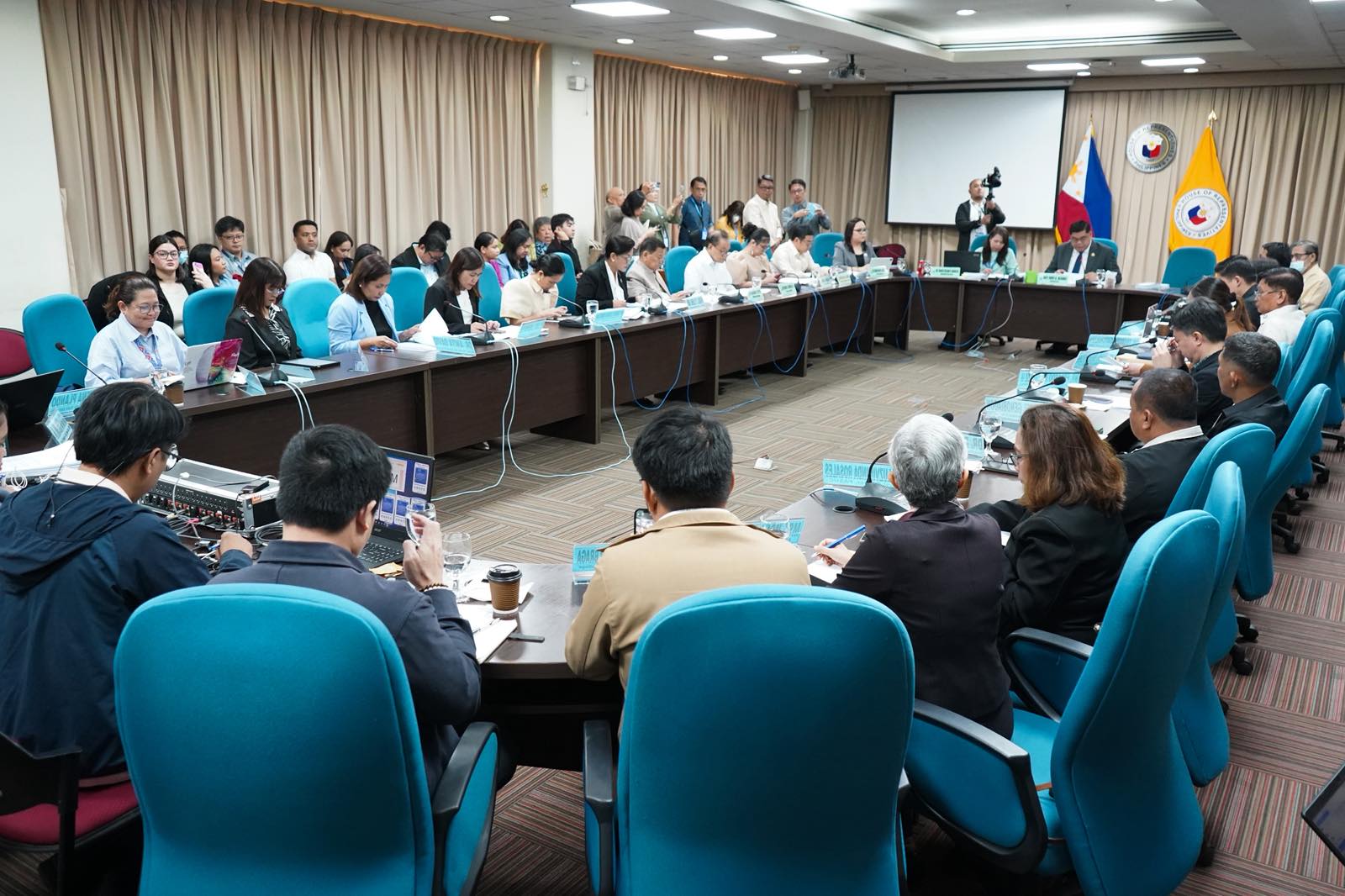
THE House Committee on Higher and Technical Education on Tuesday approved at the committee level two measures seeking to update the governance framework of State Universities and Colleges (SUCs), nearly three decades after the enactment of Republic Act No. 8292 or the Higher Education Modernization Act of 1997.
Approved were House Bill No. 4799, principally authored by TINGOG Party-list Rep. Jude A. Acidre and Rep. Andrew Julian K. Romualdez, and House Bill No. 5042, principally authored by Rep. Ziaur-Rahman “Zia” Alonto Adiong. The measures will be consolidated into a substitute bill for plenary consideration.
Republic Act No. 8292 granted SUCs fiscal and administrative autonomy beginning in 1997. However, subsequent sector-wide reviews, including findings from the Second Congressional Commission on Education (EDCOM II), have pointed to uneven governance standards, inconsistent accountability mechanisms, and gaps in board competency across institutions.
The recently approved bills seek to address these concerns by clarifying the strategic role of the Commission on Higher Education (CHED), strengthening the composition and authority of SUC governing boards, and institutionalizing differentiated autonomy based on institutional capacity and performance.
HB 4799 proposes revisions to board composition, mandates governance certification and training for board members, and establishes a Philippine Higher Education Academy to support leadership development and succession planning. HB 5042 likewise updates governance structures and reinforces accountability mechanisms to ensure SUCs remain aligned with national and regional development priorities.
Acidre, who chairs the Committee and serves as Co-Chair of EDCOM II, said the reforms reflect the need to modernize the autonomy framework established nearly three decades ago.
“For nearly thirty years, RA 8292 has anchored SUC autonomy. But autonomy must evolve with accountability,” Acidre said. “These reforms aim to build governing boards that are competent, strategic, and aligned with national priorities—institutions that can innovate while remaining answerable for results.”
He said governance reform is a key pillar of the Committee’s Ten-Point Higher Education Agenda, which seeks to align higher education with long-term economic strategy, research productivity, workforce readiness, and regional development.
The Committee will now consolidate the two measures into a unified substitute bill for House plenary deliberation.
About the Author