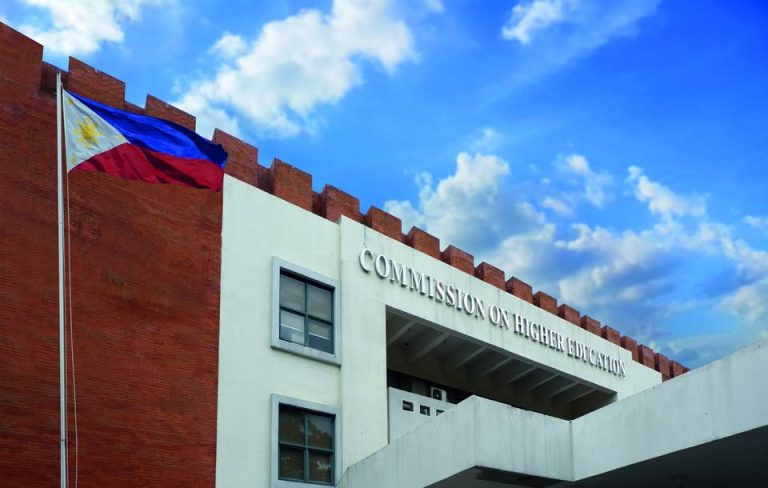
SENATORS are pushing to secure an additional ₱4.5 billion to address a funding shortfall in the Commission on Higher Education’s (CHED) Tertiary Education Subsidy (TES), which threatens to affect 70,471 continuing scholars and limit the admission of new beneficiaries.
The funding gap was raised during the Senate plenary deliberations on CHED’s proposed 2027 budget on November 27, 2026, with lawmakers warning that insufficient financial assistance could force thousands of financially disadvantaged students to discontinue their college education.
EDCOM 2 Co-Chairperson Sen. Joel Villanueva stressed that scholarship support should be sustained until beneficiaries complete their degrees, noting the adverse impact of withdrawing assistance after students have already begun their studies.
“Kung ikaw ay mabigyan ng pagkakataon at oportunidad na makapag-aral, mabigyan ng pag-asa para maabot mo ’yung pangarap, at pagkatapos sasabihin sa iyo, matapos ang isang taon, na titigil ka muna dahil may mas importante kaming nais pondohan, masakit po ’yun,” Villanueva said.
Sen. Pia Cayetano also raised concerns over the program’s recurring funding deficiencies and the successive reductions in scholarship grants over the years.
She recalled that TES assistance previously reached ₱60,000 per academic year for students enrolled in private institutions and ₱40,000 for those in public schools. These amounts were subsequently reduced to a uniform ₱20,000 before being adjusted to the current rates of ₱27,000 and ₱20,000, respectively.
“Lagi na lang tayong naghahabol doon sa funding ng TES,” Cayetano said, warning that reduced assistance could contribute to higher dropout rates, particularly among third- and fourth-year students who face additional expenses for laboratory work and other academic requirements.
Data from the Second Congressional Commission on Education (EDCOM 2) showed that 1.72 million students applied for TES during Academic Year 2025-2026, but only 241,574, or about 14 percent, were accepted as new beneficiaries.
The funding challenge comes after the passage of Republic Act No. 12325 in September 2026, which strengthened the targeting and support mechanisms of TES under Republic Act No. 10931, or the Universal Access to Quality Tertiary Education Act.
Under the new law, students from households covered by the Pantawid Pamilyang Pilipino Program (4Ps) are prioritized for TES assistance, with subsidies intended to cover tuition and other educational and living expenses.
Sen. Bam Aquino, an EDCOM 2 co-chairperson and principal author of the Universal Access to Quality Tertiary Education Act, emphasized that students receiving government assistance should be able to depend on the program throughout their college education.
Villanueva, who sponsored the CHED budget, also stressed that financial assistance must go beyond tuition payments and address students’ daily expenses, including food and transportation.
He pointed out that free tuition would mean little if students could not afford meals or had to walk long distances to attend classes, potentially forcing them to drop out despite receiving scholarships.
Aquino said rising prices of food, transportation and other basic necessities have further burdened financially disadvantaged students, prompting senators to work on identifying the additional ₱4.5 billion needed to sustain the program.
“Maghahanap po tayo ng pondo para masiguro na walang kabataang titigilan ang kanilang subsidiya. We will find a way,” Aquino said.
Villanueva likewise committed to finding the necessary funding to prevent interruptions in scholarship assistance. He also called attention to the Presidential Merit Scholarship Program, a Legislative-Executive Development Advisory Council (LEDAC) priority measure that has already been passed by Congress but remains without funding.
Meanwhile, Senate President Sherwin Gatchalian, also an EDCOM 2 commissioner, said he would submit specific funding proposals to address the shortfall and protect both continuing scholars and new applicants.
“Rest assured, hindi tayo papayag na may mga ma-displace o ma-disenfranchise na mga estudyante,” Gatchalian said, assuring that the Senate was considering solutions to ensure students could continue their college education.
About the Author