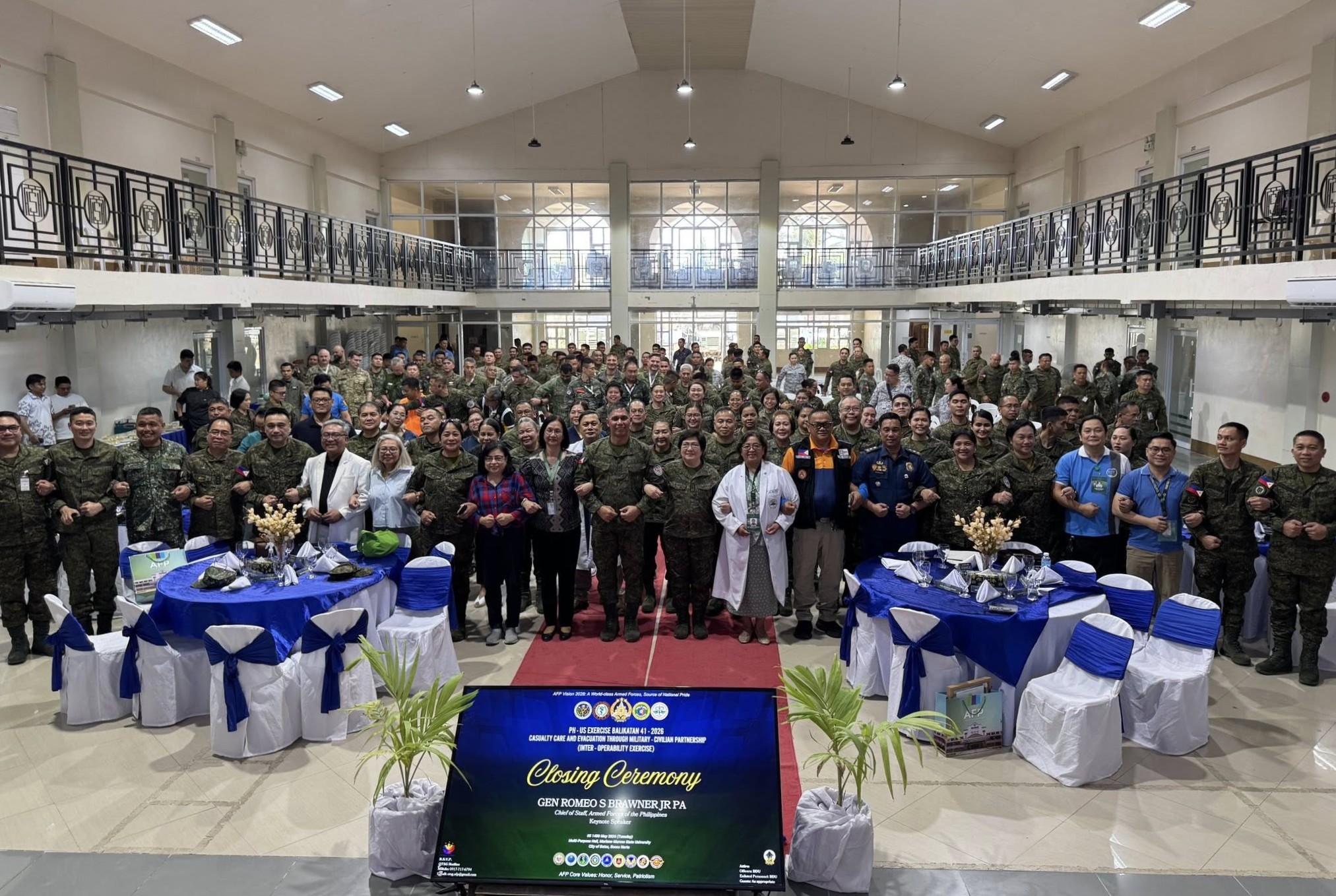
DEPARTMENT of Health (DOH) and the Armed Forces of the Philippines formally concluded the Balikatan Exercise 2026, a significant milestone in civil-military collaboration between the two agencies, on May 5, 2026, held at the Mariano Marcos State University in Batac City, Ilocos Norte.
As the first initiative of its kind in the country, the exercise demonstrated a unified and strategic approach to interoperability and readiness, with a strong focus on strengthening emergency response systems and integrated operations. This collaboration is vital in addressing increasingly complex public health and security challenges, ensuring that both military and civilian sectors are equipped to respond effectively to crises.
Secretary Teodoro Herbosa underscored the broader significance of the initiative, stating, “Balikatan 2026 reflects the kind of whole-of-government and whole-of-society approach we need today. By strengthening collaboration between the health sector, the military, and our partner institutions like MMMHMC, we are not only enhancing our emergency response capabilities—we are building a more resilient, responsive, and unified health system for every Ilocano.”
The Mariano Marcos Memorial Hospital and Medical Center (MMMHMC), one of the DOH apex hospital north of Manila, played a major role in the exercise, brought invaluable clinical expertise and real-world experience in managing emergencies.
The hospital’s multidisciplinary team—including surgeons, emergency response leaders, and nursing officials—played a pivotal role in simulating coordinated medical responses. Their involvement highlighted how hospitals are not just treatment centers but critical command hubs in disaster preparedness and response.
Medical Center Chief Maria Lourdes K. Otayza expressed strong institutional support for sustained collaboration, stating, “Mariano Marcos Memorial Hospital and Medical Center stand firmly with the Department of Health and the Armed Forces of the Philippines in advancing integrated emergency response systems.
“Our participation in Balikatan 2026 reflects our unwavering commitment to protect lives through excellence in clinical care, disaster readiness, and interagency cooperation. We recognize that resilience is built through partnership, and we are ready to continuously work alongside our national and regional partners in safeguarding the health and safety of our communities,” she emphasized.
Indeed, the success of Balikatan 2026 affirms that when sectors converge with a shared purpose, resilience becomes a collective strength—empowering communities and safeguarding lives across the region.
About the Author