HOUSE Committee on Higher and Technical Education Chairperson and TINGOG Party-list Rep. Jude Acidre on Friday called on Catholic higher education institutions to take a more active role in shaping national reform, saying the country will need universities capable of forming graduates guided not only by competence and innovation, but also by conscience, service, and responsibility to the Filipino people.
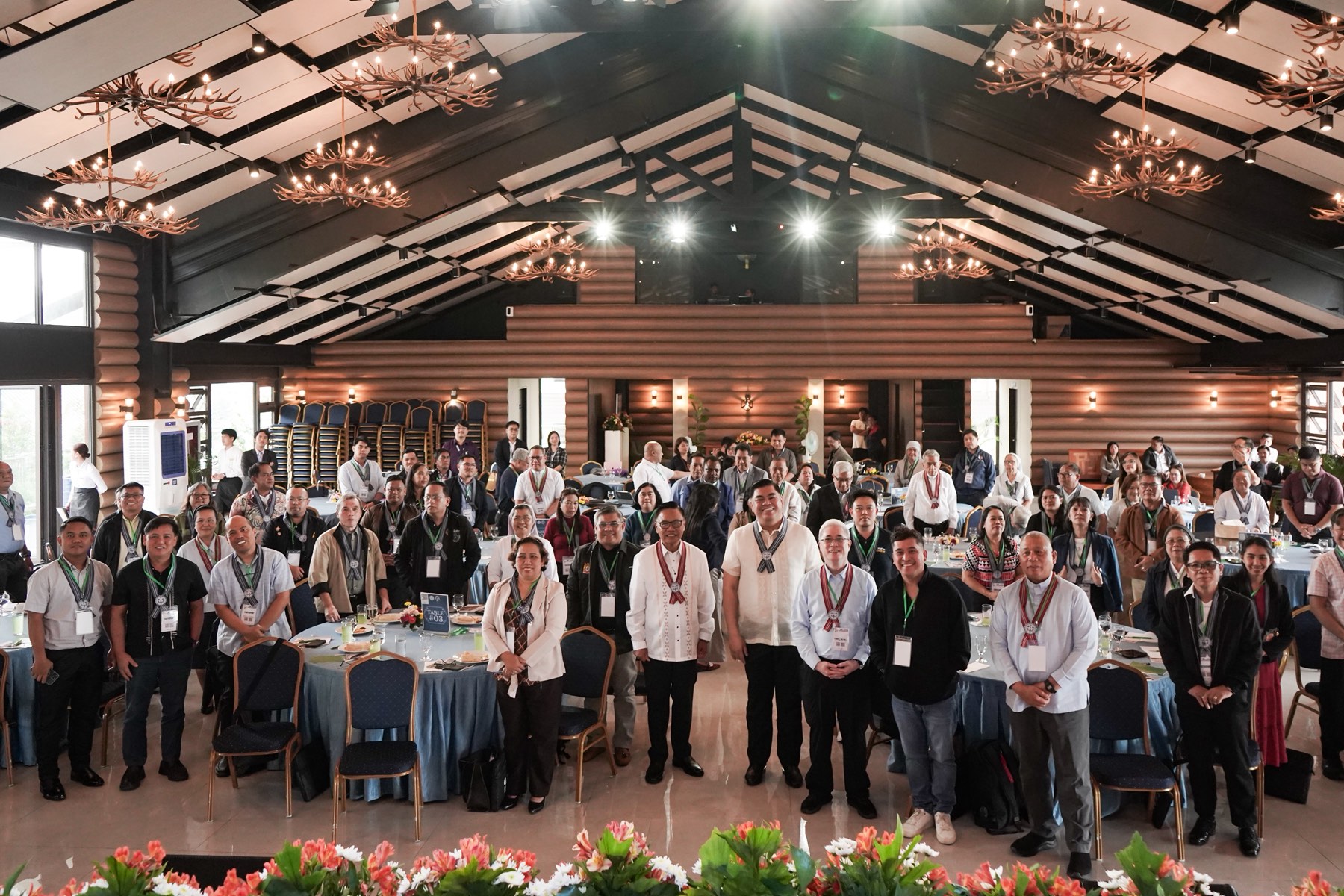
Delivering the keynote address during the CEAP Vision Forum 2026 at Saint Louis University in Baguio City, Acidre said Catholic universities continue to play a critical role in Philippine higher education at a time when the country faces widening educational inequality, rapid technological disruption, declining public trust, and growing social fragmentation.
“The future of Philippine higher education needs the Catholic contribution,” Acidre said. “It needs our long tradition of formation. It needs our commitment to human dignity. It needs our experience in serving communities. It needs our moral imagination. It needs our ability to hold together faith and reason, excellence and compassion, innovation and conscience.”
The forum, organized by the Catholic Educational Association of the Philippines (CEAP) Higher Education Commission under the theme “Barriers and Breakthroughs: Pushing Back Against the Limits,” gathered Catholic higher education leaders from across the country to discuss the changing realities confronting Philippine higher education and the role of Catholic institutions in responding to them.
Among those present were CEAP President Fr. Karel S. San Juan, SJ, who also serves as President of Ateneo de Davao University; CEAP National Higher Education Commission Chair and Saint Louis University President Fr. Gilbert B. Sales, CICM; CEAP Executive Director Narcy F. Ador Dionisio; Most Rev. Rafael T. Cruz, D.D., Bishop of the Diocese of Baguio; and Catholic education leaders and administrators from various institutions nationwide.
Throughout his address, Acidre emphasized that Catholic higher education must remain centered on the human person even as universities confront major changes brought about by artificial intelligence, automation, digital transformation, and evolving workforce demands.
“At its deepest level, education is about the human person,” Acidre said. “It is about the young student who enters our gates carrying dreams, fears, questions, burdens, and possibilities.”
He warned against reducing higher education to purely economic or workforce outcomes, saying universities must continue forming graduates capable of rebuilding communities, restoring trust in institutions, and strengthening democratic life.
“This is a conversation about schools and universities. More deeply, it is a conversation about the kind of persons we are forming, the kind of society we are building, and the kind of future we are preparing for our young people,” he said.
Acidre said Catholic higher education institutions are uniquely positioned to help ensure that technological progress and innovation remain anchored on ethics, solidarity, and the common good.
“Technology must serve the human person,” Acidre said, as he called on universities to strengthen digital literacy, ethical reasoning, critical thinking, and technological competence while preserving the human dimension of education.
He also framed the mission of Catholic higher education around three pillars: formation, communion, and innovation, stressing that Catholic institutions must continue forming the whole person, strengthen collaboration across sectors, and pursue reforms that remain faithful to mission while responding to changing realities.
The TINGOG legislator added that Catholic universities must continue embracing new tools, partnerships, and ways of teaching while remaining rooted in mission and service.
Amid growing political polarization and declining public trust, Acidre also appealed for continued moral leadership from Catholic institutions and educators, saying higher education must help form citizens capable of rebuilding institutions and contributing to national renewal.
“We need societal systems change and a real culture shift: from patronage to participation, from cynicism to citizenship, from convenience to conscience, from political survival to public service,” he said.
Closing his address, Acidre reminded educators and academic leaders that education ultimately remains “an act of hope” capable of shaping both the nation and the future of its people.
“May our colleges and universities be more than institutions of learning,” Acidre said. “May they be homes of wisdom, communities of faith, workshops of service, laboratories of hope, and instruments of national renewal.”
About the Author