PRESIDENT Ferdinand R. Marcos Jr. on Monday said ongoing and completed irrigation projects in Bohol are expected to help cushion the impact of a possible El Niño episode by providing farmers with a more reliable source of water for agricultural production.
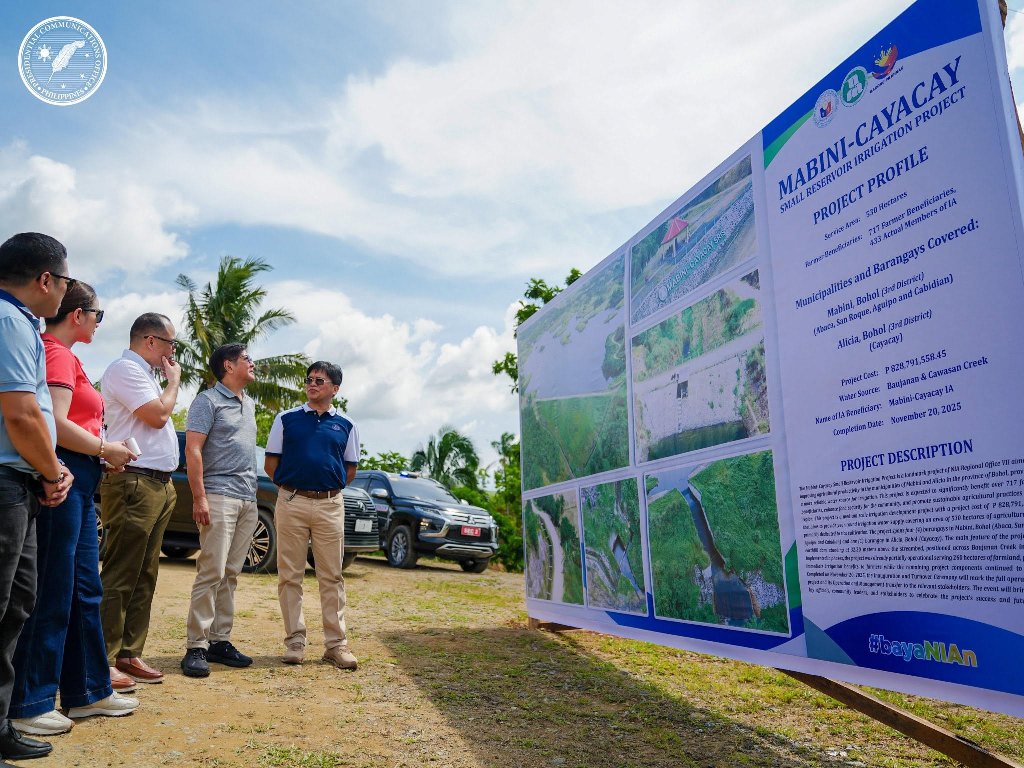
Speaking during the inauguration of the P833.37-million Mabini-Cayacay Small Reservoir Irrigation Project (SRIP), President Marcos said government data indicate a strong possibility that the country could experience a severe El Niño event that may last until 2027.
“Ayon sa ating datos, malaki ang posibilidad na makakaranas ang bansa ng matinding El Niño na maaaring tumagal hanggang sa susunod pa na taon, 2027,” the President said.
President Marcos said the government is strengthening irrigation infrastructure to help farming communities prepare for the potential effects of prolonged dry weather.
The Mabini-Cayacay SRIP will provide irrigation services to 530 hectares of farmland across five barangays in the municipalities of Mabini and Alicia, benefiting 717 farmers, including members of the Mabini-Cayacay Irrigators’ Association, Inc.
The President said the project would give farmers a dependable source of water and reduce their vulnerability to drought.
“Kasabay nito, mababawasan ang kanilang pangamba sa epekto ng El Niño, sapagkat may maaasahang pagkukunan ng tubig para sa mga pananim,” President Marcos said. “Dahil sa sapat na suplay ng tubig, inaasahan nating tataas ang ani, lalo na ng palay at mga high-value vegetable crop. Dagdag pa diyan, mula sa dalawang beses sa isang taon na pagtatanim, puwede nang magtanim ang ating mga magsasaka nang three – tatlong planting sa isang taon.”
The President noted that the facility was designed to assist farmers who have long relied on rainfall to sustain crop production.
“Ito ay isa sa ating mga mahahalagang hakbang upang tulungan ang mga magsasakang matagal nang umaasa lamang sa ulan upang mapalago ang kanilang mga pananim,” the Chief Executive said.
President Marcos emphasized that protecting farmers from the effects of climate-related disasters remains a key responsibility of the government.
“Tungkulin namin sa pamahalaan na pantayan ang sipag ninyo. Kaya’t gumagawa kami ng mga pasilidad at nagbibigay ng mga kagamitan upang matiyak na hindi masasayang ang inyong pagod at ang inyong sakripisyo,” the President said.
President Marcos added that the government continues to invest in irrigation systems and agricultural support programs to improve farm productivity and strengthen the resilience of rural communities.
“Bilang tugon sa banta ng El Niño, pinayuhan na natin ang ilang magsasaka na magtanim ng high-value commercial crop gaya ng pakwan, ng luya, ube, mani, at talong—imbes na palay na nangangailangan ng mas maraming tubig,” President Marcos emphasized.
“Higit sa lahat, itinataguyod natin ang makabagong pamamaraan sa pagsasaka na angkop sa klima—gaya ng paggamit ng solar pump at water reuse o recycling sa mga lugar na madalas maapektuhan ng tagtuyot,” the President added.
The President noted that small reservoir irrigation projects form part of a broader strategy to help farmers cope with climate-related risks and ensure stable food production.
President Marcos also cited other irrigation projects being implemented in Bohol, including the Bonot-Bonot SRIP in Buenavista, the Hibale SRIP in Danao, the Molinao Dam Improvement Project in Pilar, the Catungawan SRIP in Guindulman, and the Mandaug SRIP in Calape.
According to the President, these projects are expected to provide irrigation services to thousands of hectares of farmland and benefit more than 2,400 farmers across the province.
As part of preparations for the anticipated El Niño, President Marcos said farmers have been encouraged to diversify their crops and adopt water-efficient farming practices.
The President noted that high-value crops such as watermelon, ginger, purple yam, peanuts, and eggplant are among the recommended alternatives because they generally consume less water than rice.
The government is also promoting climate-adaptive farming technologies, including solar-powered irrigation pumps and water recycling systems, particularly in drought-prone areas, President Marcos added.
“Kaya’t sa ilalim ng Administrasyon, ating itinaguyod ang mga SRIP—mga small irrigation project na ganito. Kabilang nito sa Mabini–Cayacay upang mapataas ang kita ng ating mga magsasaka at maging mas matatag naman ang laban sa sakuna,” the President pointed out.
About the Author