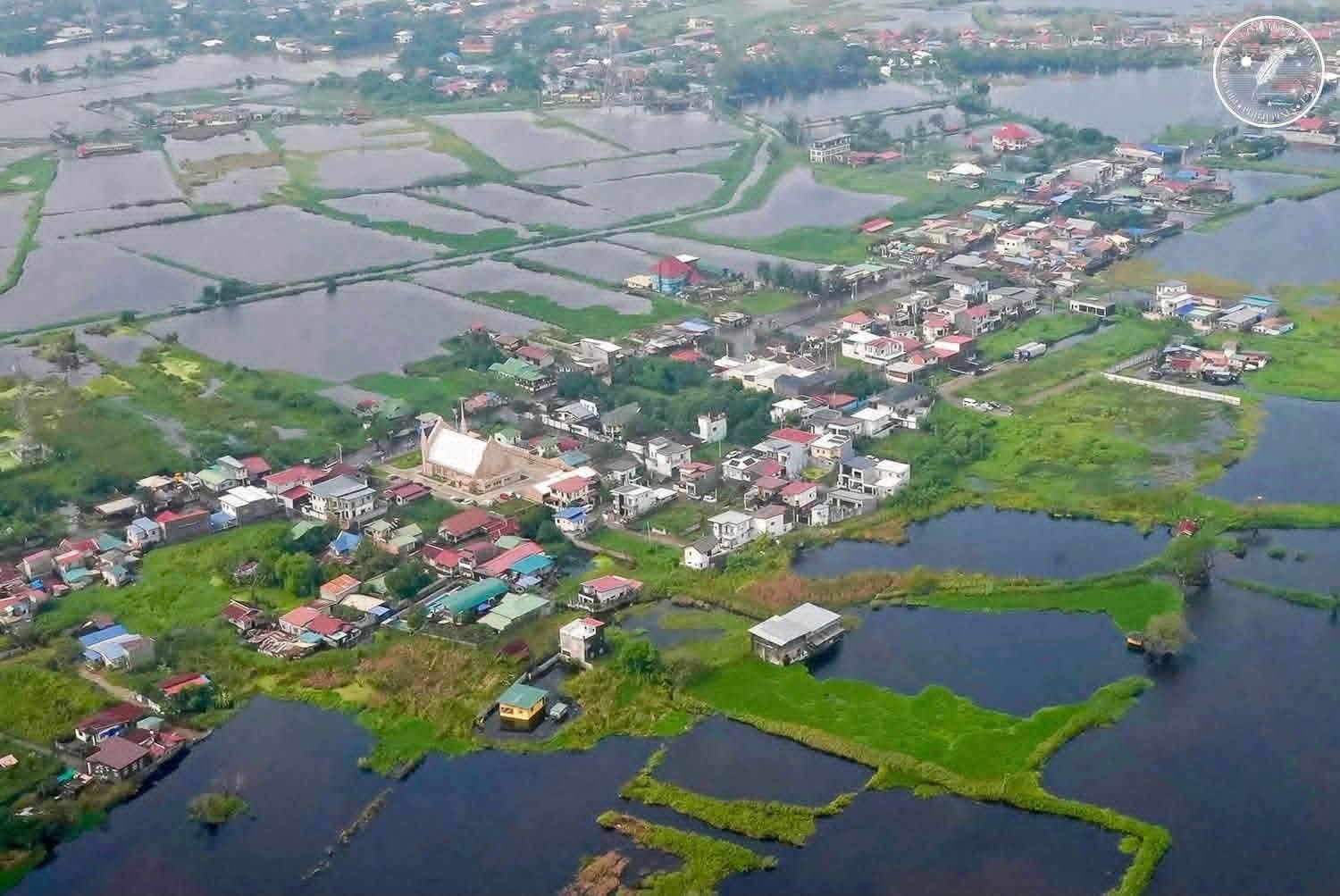
SAN Miguel Aerocity Inc. (SMAI), developer of the New Manila International Airport (NMIA), has pushed back against claims that the airport caused the recent flooding in Bulacan, saying years of studies were conducted to address the province’s long-standing flood risks.
“We did not cause Bulacan’s flooding,” SMAI said, stressing that flooding in the province has existed for decades.
According to SMAI, Bulacan’s flooding is driven by its low-lying terrain, heavy rains, river flows, land subsidence, rising sea levels and high tides.
The company said NMIA’s flood studies and hydrological modeling started in 2018, covering river movement, storm surges, land subsidence and the possible effects of the airport on nearby communities.
SMAI said a 2019 flood assessment recommended engineering measures to improve water flow, while studies consolidated by Mott MacDonald in 2021 showed that the airport platform needed to be raised to 3.85 to 5.50 meters above mean sea level.
The company said NMIA also adopted a riverbed-deepening strategy for the Maycapiz-Taliptip, Santa Maria and Meycauayan rivers, instead of extensive river widening.
Meanwhile, San Miguel Corp. (SMC) said its Better Rivers PH program removed more than 1 million metric tons of silt and waste from the three rivers between 2022 and 2024.
SMC said its broader cleanup and dredging operations across Bulacan have removed more than 4.3 million metric tons of silt and waste as of Aug. 18, 2026.
SMAI also rejected the characterization of NMIA as a reclamation project, saying the airport is being built on existing titled land formerly used as commercial fishponds.
The company said solving Bulacan’s flooding problem, however, goes beyond the airport and requires a province-wide flood-control strategy, including improved rivers, flood-control structures and pumping stations.
SMAI said it will continue implementing NMIA’s flood-mitigation measures and coordinate with government agencies and local officials to strengthen flood protection across Bulacan.
About the Author