THE Senate and House of Representatives have ratified the reconciled version of a bill expanding the Government Assistance to Students and Teachers in Private Education (GASTPE) Act to include qualified learners from Kindergarten to Grade 6 under a revamped basic education voucher program.
The measure, a priority bill under the Legislative-Executive Development Advisory Council (LEDAC), seeks to update the nearly four-decade-old GASTPE framework by establishing a more targeted, transparent and data-driven Basic Education Voucher Program covering learners from Kindergarten to Grade 12.
The bill was principally authored by EDCOM 2 Co-Chairpersons Senators Bam Aquino and Joel Villanueva and Reps. Roman Romulo and Jude Acidre, along with EDCOM 2 Commissioners Senate President Sherwin Gatchalian, Sen. Loren Legarda, Rep. Zia Alonto Adiong and Rep. Anna Victoria Veloso-Tuazon.
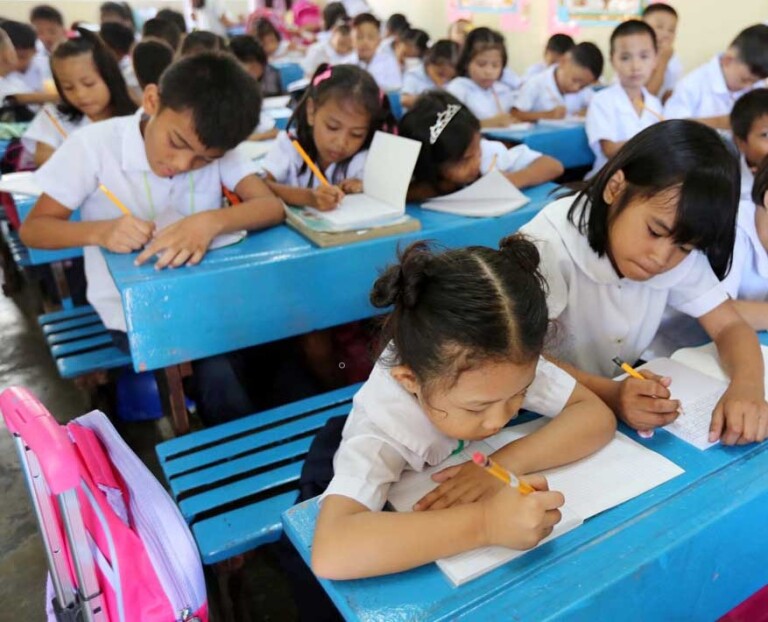
The reform comes amid continuing classroom shortages nationwide. Department of Education data showed a classroom backlog of 147,347 as of September 2025, while 1,889 schools operated on double or triple shifts during School Year 2024–2025, requiring an estimated 52,871 additional classrooms to eliminate shifting.
Under the measure, qualified Kindergarten to Grade 6 learners may receive Basic Education Voucher Assistance, allowing the government to tap available capacity in private schools while giving families additional schooling options and helping decongest overcrowded public schools. EDCOM 2 estimates that the program could benefit about 121,035 learners, or 22.5 percent of those affected by classroom congestion.
Priority will be given to learners in public schools identified by DepEd as congested, those living in areas without nearby public schools, and those in communities served by overcrowded schools.
The bill also requires DepEd to establish a public dashboard containing information on participating private schools, including their locations, available slots, tuition fees and any required top-up when the voucher amount falls below tuition costs.
It further institutionalizes a Nationwide School Congestion Mapping and Strategic Allocation Framework to guide evidence-based voucher allocation and ensure that the program complements the government’s ongoing classroom construction efforts.
The measure also creates a Bureau of Private Education within DepEd to serve as the focal office for supervising and implementing government assistance programs for private basic education institutions.
“Government assistance to private education has demonstrated that public and private schools can work as partners in delivering quality education,” Romulo said, adding that the expanded voucher system would make government assistance more targeted and responsive to areas with the greatest need.
Aquino said the measure would provide families with more schooling options while helping address capacity constraints in the public education system.
The reconciled bill will now be submitted to the Office of the President for the President’s action following the ratification of the bicameral conference committee report.
About the Author