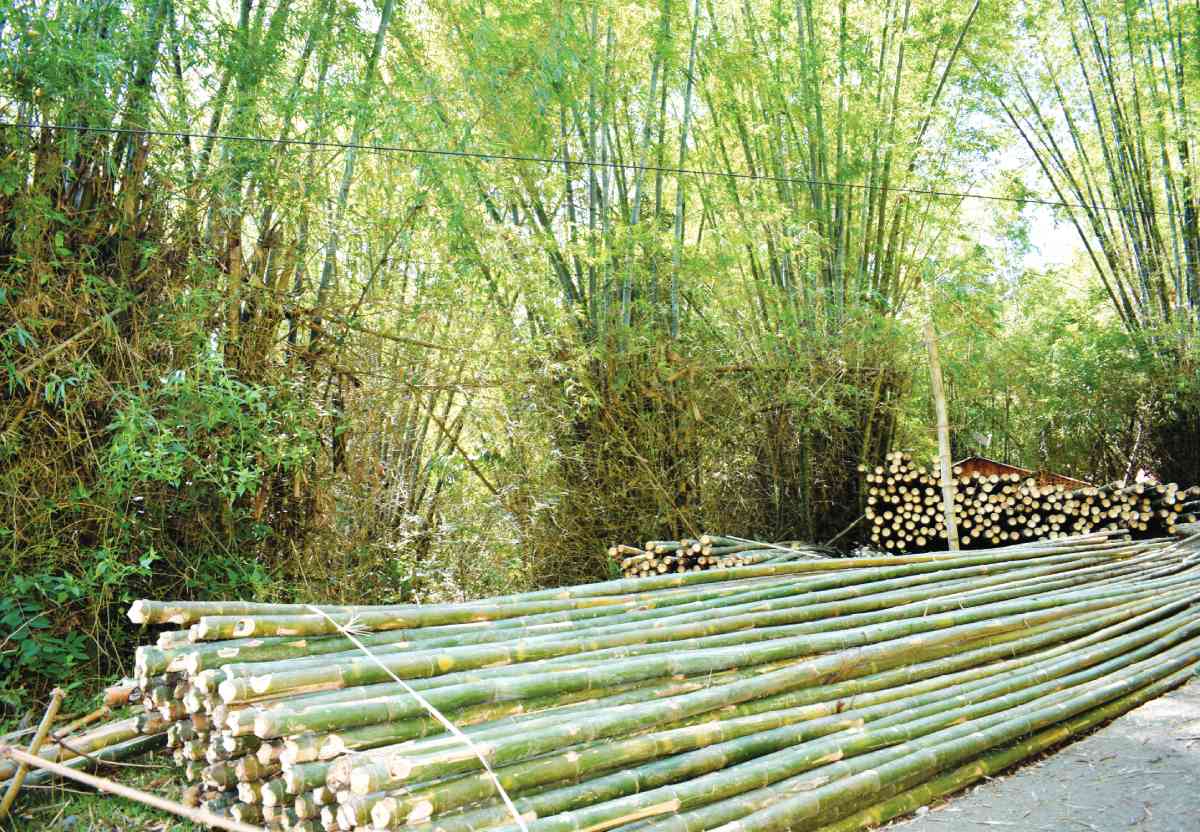
HOUSE Speaker Faustino “Bojie” G. Dy III is pushing for a stronger Philippine bamboo industry, saying the fast-growing plant can become a major source of jobs, farmer income and locally made products.
Dy made the call Thursday during the “Building the Future with Bamboo” program at the Asian Development Bank (ADB) headquarters in Mandaluyong City.
The Speaker said his bamboo advocacy started years ago in Isabela, where he encouraged communities to plant bamboo along the Cagayan River to help protect slopes and watersheds.
But for Dy, bamboo is more than an environmental solution.
He said it can become a long-term livelihood for farmers and an economic driver for rural communities if government and the private sector work together to build the industry from the farm all the way to the market.
“Our hope is that bamboo grown in Isabela will become furniture for our schools, panels for our buildings, and products sold here and abroad,” Dy said.
“Each product would help Filipino farmers, workers, and their families earn a better living.”
FROM FARM TO FACTORY
Dy stressed that planting bamboo is only the beginning.
Farmers need reliable markets. Processors need a steady supply. Manufacturers need equipment, skilled workers and buyers, while builders need confidence in the quality and safety of bamboo products.
“We have to connect these needs so that everyone has a fair chance to succeed,” he said.
The House is now advancing several measures aimed at building this farm-to-industry ecosystem.
The House Committee on Agriculture and Food recently approved a substitute bill that seeks to strengthen Republic Act No. 7900, or the High-Value Crops Development Act of 1995.
The measure would recognize bamboo as both a high-value and industrial crop and institutionalize the National High-Value Crops Development and Bioeconomy Program.
It also includes a bamboo development component designed to connect farmers with processors, manufacturers and markets.
BAMBOO FOR BUILDINGS
Dy also cited House Bill No. 10312, or the proposed Bamboo for a Sustainable and Climate-Resilient Built Environment Act, which seeks to support research, standards and training for the wider and safer use of bamboo in construction.
Another measure, House Bill No. 8360, or the proposed Bamboo Products Procurement Act, would require government agencies to allocate at least 25 percent of their furniture and fixtures budgets to certified engineered bamboo and other bamboo-based products.
The House is likewise advancing the proposed Philippine Bamboo Industry Development Act, which seeks to strengthen the industry council, promote research and encourage bamboo plantations.
“These measures reflect our full support for the Philippine bamboo industry,” Dy said.
“We work to make our laws help turn its potential into investments, jobs, and better incomes.”
FROM ISABELA TO THE NATION
Dy said his vision for bamboo began in Isabela but should eventually benefit communities across the country.
“My dream began with planting bamboo in Isabela. Today, I hope we can help that dream grow across the country,” he said.
“Let us build a Philippine bamboo industry that our farmers can depend on, our workers can thrive in, and our country can be proud of.”
The event was organized by the Philippine Bamboo Industry Development Council, ADB and BASE Bahay Foundation as part of the week-long Building the Future with Bamboo: Connecting Industry, Innovation, Standards, and Construction program marking Philippine Bamboo Month.
The gathering also featured the launch of the Manual for the Design of Bamboo Structures to ISO 22156:2021 and a bamboo exhibition.
Government officials, lawmakers, industry representatives, engineers, researchers and delegates from Indonesia and Nepal also attended the event.
Dy said the new structural design manual would give engineers and builders greater confidence in using bamboo as a construction material.
He called on farmers, processors, researchers, architects, engineers, manufacturers, builders, investors and government agencies to work together to turn bamboo’s potential into real investments, jobs and sustainable livelihood opportunities.
About the Author