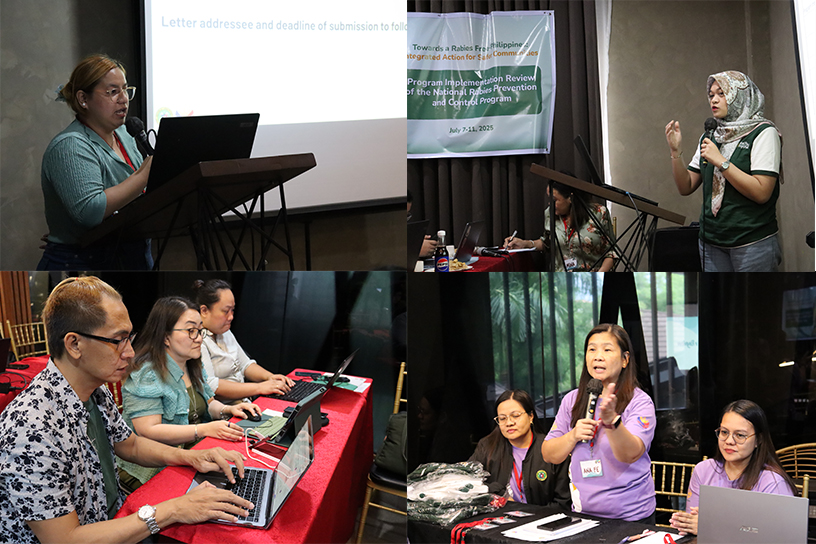
The Department of Health (DOH) will further strengthen and improve the implementation of the National Rabies Program in the country after evaluating the program implementation and performance relative to its target and objectives during the five-day Program Implementation Review (PIR) attended by all rabies prevention and control regional coordinators nationwide held in San Ildefonso, Ilocos Sur from July 7-11, 2025.
The PIR has identified policy and operational issues and gaps, including vaccine shortage, and proposed recommendations and strategies to address these concerns and also to ensure that resources are used efficiently and interventions are tailored to local needs.
According to Dr. Jem Mariel V. Langas, National Program Manager for Rabies, regular reviews are essential for achieving national and local targets, including the elimination of human deaths from dog-mediated rabies.
“As of June 14, 2025, there are 159 reported rabies cases, which is a 28% decrease compared to the same period last year, with 220. And dogs were the most common animal involved, with almost equal distribution between domestic and stray. Most of these animals have an unknown vaccination or unvaccinated history,” she explained.
She also encouraged all regional coordinators to register all animal bite treatment centers and animal bite centers in the National Rabies Information System (NaRIS) to ensure prompt reporting of cases at all levels.
DOH-Ilocos Region, which accommodated the event together with DOH-CAR, said that promotion of responsible pet ownership and rabies education programs must also be included in the school health teaching curriculum to empower students, including the community, to take proactive action against rabies.
Regional Director Paula Paz M. Sydiongco stated that rabies elimination is a collective effort that requires coordinated action from various stakeholders, including DA-BAI, DILG, DepEd, as well as individuals and communities.
She also encouraged barangay officials to ensure there are no stray dogs in their respective areas.
In Region 1, a total of 62,638 animal bites were reported during the first quarter of 2025, with victims receiving the rabies vaccine.
On the other hand, to provide financial support to victims of rabies, PhilHealth provides an Animal Bite Treatment (ABT) package to cover the costs associated with post-exposure prophylaxis for rabies following an animal bite worth PHP 5,850, which includes rabies vaccine, rabies immune globulin, local wound care, tetanus toxoid, antibiotics, and necessary medical supplies.
About the Author