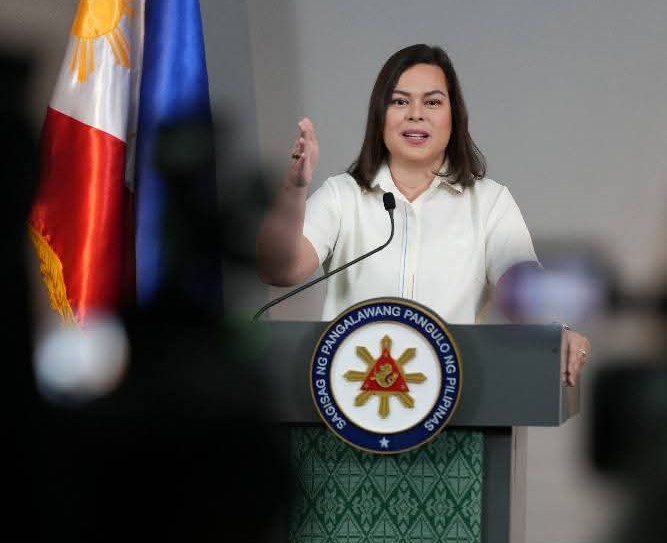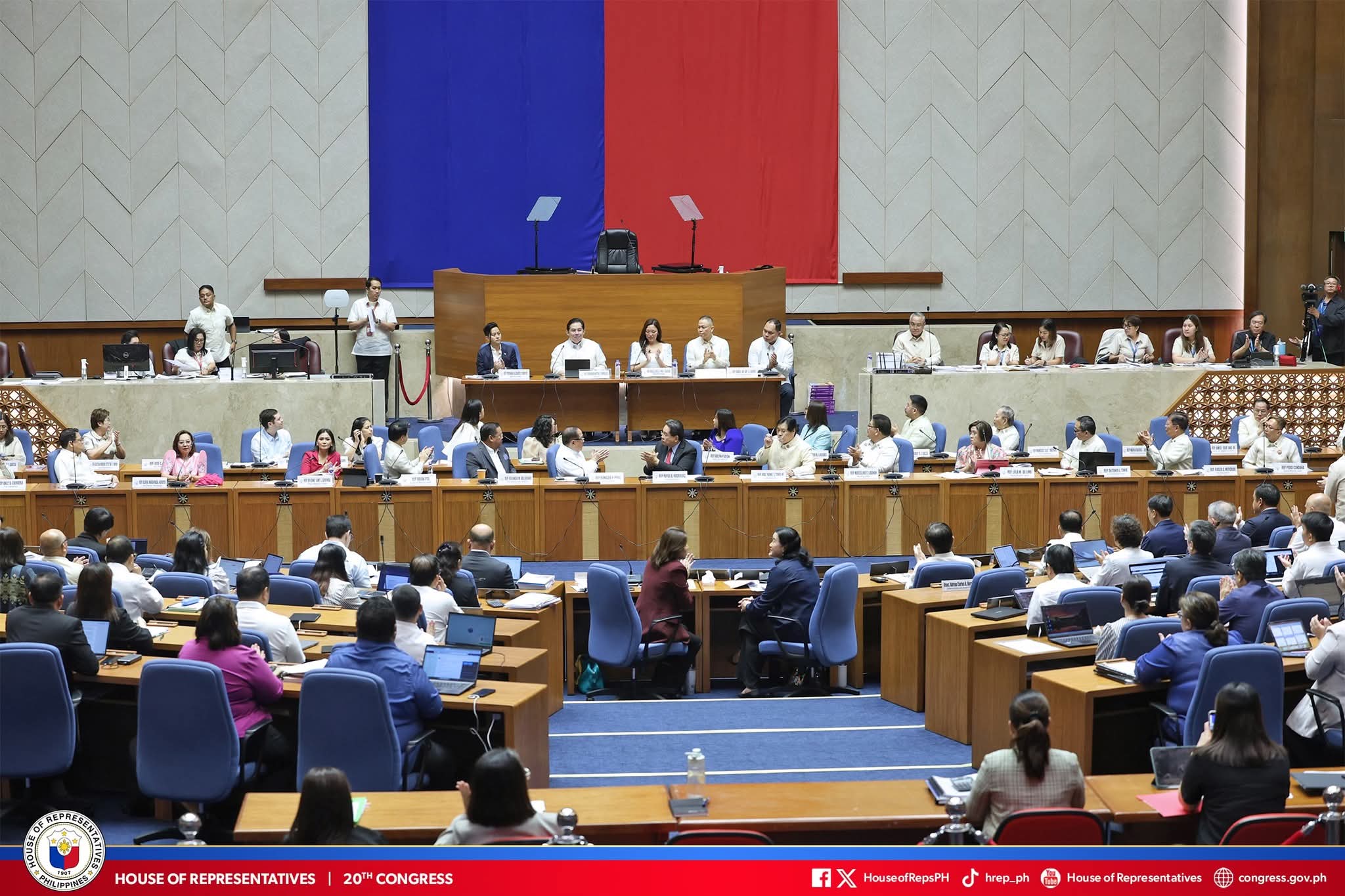
Speaker Ferdinand Martin G. Romualdez delivers his opening remarks before members of the Development Budget Coordination Committee (DBCC) and appropriations committee at the start of deliberations on next year’s outlay at the plenary of the House of Representatives on Monday, Aug. 18, 2025. “To our partners in the Executive Branch, allow me to be clear: we will scrutinize, we will question, we will deliberate thoroughly. But we will do so not as adversaries, but as allies united by a shared purpose,” Romualdez said. Also in photo (from left) are Majority Leader Ferdinand Alexander “Sandro” Marcos, committee chairperson Rep. Mikaela Angela Suansing, senior vice chairperson Rep. Albert Garcia and Senior Deputy Speaker David “Jay-jay” Suarez.
THE House of Representatives, led by Speaker Ferdinand Martin G. Romualdez, on Monday began deliberations on the proposed P6.793-trillion national budget for fiscal year 2026 — the largest in the country’s history — vowing to ensure that every peso benefits Filipinos and that the process itself reflects transparency, accountability and public participation.
The Development Budget Coordination Committee (DBCC) — composed of the Department of Budget and Management, Department of Finance, Department of Economy, Planning and Development, Office of the President, and the Bangko Sentral ng Pilipinas as adviser — briefed the House Committee on Appropriations in plenary.
In her opening remarks, Nueva Ecija 1st District Rep. Mika Suansing, chair of the House Committee on Appropriations, underscored the chamber’s commitment to meaningful reforms and people-first budgeting.
“We envision the budget for FY 2026 to be centered on the Filipino people — both in terms of expenditure priorities and the budget process itself,” Suansing said during the briefing.
“This is why we fully support the framework laid out by the DBCC, which emphasizes human capital development in crafting the 2026 national budget — by prioritizing investments in quality education, healthcare and workforce upskilling,” she added.
Suansing emphasized that Congress will ensure that the country’s largest-ever proposed budget results in visible and tangible improvements in the daily lives of Filipinos.
“Sisiguraduhin po ng Kongreso na ang P6.793 trillion na budget ng ating bansa ay pakikinabangan ng ating mga kababayan,” Suansing said.
“Mararamdaman at makikita po ninyo ito — mas maginhawang pagpapagamot, mas dekalidad na edukasyon at mga classroom, mas maraming dekalidad na trabaho, at mas magandang mga kalsada para sa mga magsasaka upang mas mapadali ang pagdala ng inyo pong mga produkto sa merkado,” she pointed out.
Suansing also announced bold reforms to the budget process aimed at dismantling secrecy and restoring public trust.
“Naririnig po natin ang panawagan ng ating mga kababayan na mas maging bukas ang proseso at magkaroon po kayo ng mas malakas na boses sa pagbuo ng budget,” the House budget panel chief said.
“In response to our people’s clamor, and in support of the call of President Ferdinand R. Marcos Jr. and of Speaker Martin Romualdez toward increased transparency and public participation in the budget process, we will enact major reforms: we will abolish the ‘small committee,’ open the bicameral conference committee proceedings, and institutionalize civil society engagement in the budget process,” she continued.
These changes, she said, reflect a deeper principle that Filipinos should have a direct stake in how their taxes are spent.
“Our commitment is firm: In this budget and in the years to come, we are bringing the Filipino people back to the center of the budget process where you rightfully belong,” Suansing said.
“Ang bawat piso ng budget na ito ay galing sa dugo at pawis ng mga Pilipino, kaya magiging masusi po ang deliberasyon ng inyong Kongreso sa mga darating na buwan upang siguraduhin na ang bawat piso ay mailalaan para sa ikabubuti ng ating mga kababayan,” she added.
Suansing acknowledged the immense responsibility facing the House, urging her colleagues to meet it with courage and unity as she expressed readiness to work with the Executive branch in crafting a budget that responds to the people’s needs and tackles long-standing institutional reforms.
“But while doubly arduous, I ask you to please join us on this journey — because we are at a critical juncture. The work that we will be doing in the next months alone will be an important determining factor in safeguarding the Filipino people’s faith in the budget process and in securing our country’s economic future for generations to come,” she said.
“We need to do this for our country. We need to do this for the Filipino people,” she concluded.
The DBCC, as the government’s top fiscal planning body, is responsible for reviewing and recommending macroeconomic targets, revenue forecasts, borrowing levels, aggregate spending limits and expenditure priorities to the President and Cabinet.
Budget deliberations are expected to continue over the coming months, with the House aiming to pass the 2026 General Appropriations Bill on third and final reading before the end of the year.
About the Author