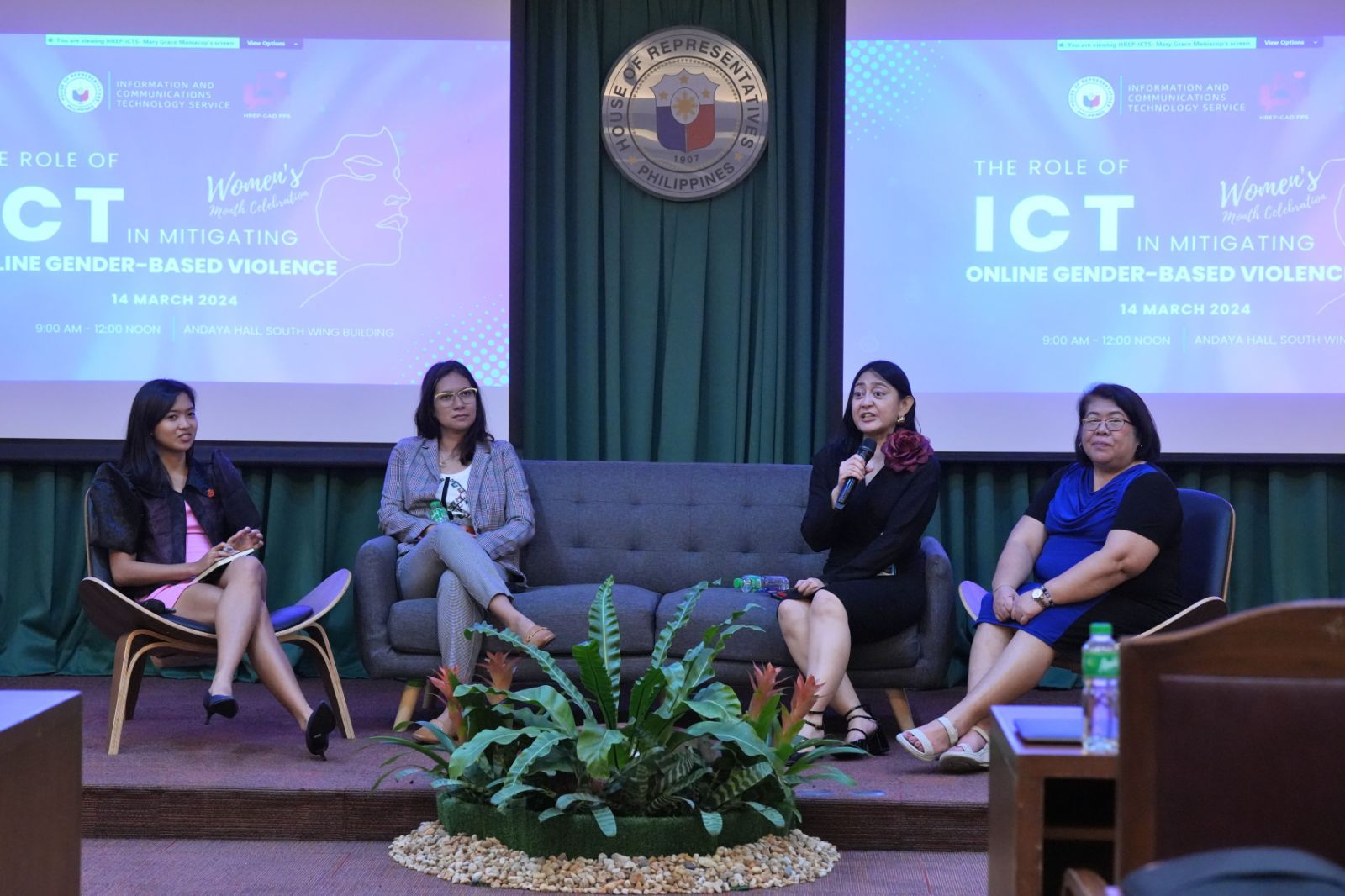
AS part of the House of Representatives’ celebration of National Women’s Month, its Information and Communication Technology Service (ICTS) and Gender and Development Focal Point System (GAD-FPS) organized a seminar on the role of ICT in mitigating online gender-based violence (GBV).
Resource person Mary Rose Magsaysay, Deputy Executive Director of the Department of Information and Communications Technology – Cybercrime Investigation and Coordinating Center (DICT-CICC), warned participants that gender-based cybercrimes nowadays are already hybrid.
“Meaning to say, hindi lang isang rason ang kanilang gagamitin o paraan para kayo po ay maloko or ma-fraud, ma-scam at magamit ang mga kakabihan at mga kabataan para kumita ang mga tao,” she said.
DICT Digital Certificate Division chief Dr. Thelma Villamorel explained that new technologies bring not only great advantages but also new forms of GBV.
She listed cyberstalking, cyberbullying, online hate speech, online revenge porn, cyber voyeurism, online trolling, online flaming, doxing, grooming and Internet of Things (IoT) – facilitated GBV as the commonly committed violence against girls and women online.
To ensure online safety, she recommended encrypting files, seeking help, reviewing social media privacy settings, using strong, unique passwords and two-factor authentication, blocking online harassers, reporting abuse and gathering evidence.
University of the Philippines Assistant Professor Maritess Cruz underlined the importance of utilizing survivor-centered, trauma-informed and gender-transformative methods while working with GBV survivors.
Jeza Rodriguez, chief operating officer of Lunas Collective, a chat service providing a safe space for women, youth, and members of the LGBTQIA+ to voice out their concerns on sensitive topics, including reproductive health concerns or experiences of gender-based violence, stressed the significance of listening, understanding, nurturing, creating action plans and providing social support when assisting GBV victims.
Magsaysay shared that the Inter-Agency Response Center (I-ARC) hotline 1326 has been established and is available for inquiries regarding SIM registration, cybersecurity, data privacy, cybercrime and ICT consumer protection.
The I-ARC is the government’s complete platform for responding to public concerns about cybercrime and monitoring cross-agency operations. It serves as a central hub for public assistance, response and monitoring of cybercrime incidents.
House Secretary General Reginald Velasco said the lessons from the seminar would help minimize and prevent GBV at the House of Representatives.
“Sama-sama tayong matuto sa ating mga panauhin upang patuloy nating mapagtagumpayan ang ating layunin to make the House of Representatives a safe place to be for everybody,” he said.
About the Author