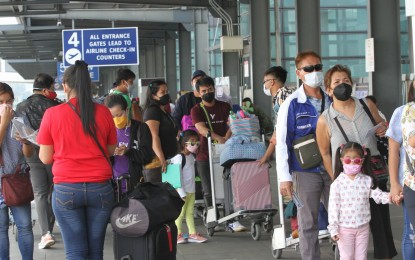
LIGAO CITY — INCOMING Albay 3rd District Representative and outgoing Polangui Mayor Adrian Salceda announced plans to file the Filipino Travelers’ Rights Act during the first week of the 20th Congress this July. The bill seeks to uphold Filipinos’ right to travel by eliminating arbitrary offloading practices and modernizing the country’s outdated outbound immigration procedures.
“We are the only country I know of where immigration assumes you’re doing something wrong the moment you try to leave,” Salceda said. “Even countries with similar income levels have more respectful and rule-based systems. This law will correct that.”
A Move from Discretion to Rules
The proposed measure restricts the grounds for denying departure to specific, documented cases—such as active hold departure orders or validated referrals from agencies like the Inter-Agency Council Against Trafficking (IACAT). Salceda stressed that women and young travelers are disproportionately affected by vague profiling criteria, often based solely on appearance, occupation, or presumed income.
The bill also proposes an online pre-clearance system where travelers can upload proof of income, travel bookings, and itineraries, enabling them to bypass face-to-face questioning entirely unless red flags are triggered.
“Let’s use technology to enforce the law fairly,” Salceda added. “The focus of immigration officers should be those entering the country illegally, not those trying to leave it lawfully.”
Measured Economic Impact
Salceda emphasized that the proposal also has macroeconomic benefits.
According to data from the Philippine Statistics Authority (PSA), over 3.8 million Filipinos traveled abroad in 2023, including 1.9 million overseas workers and 1.2 million outbound tourists. Even if a small fraction of these travelers were wrongly delayed, the ripple effects on spending, remittances, and time-sensitive travel—such as job deployment—can be significant.
“If just 1% of outbound travelers lose a confirmed job, for example, because of unjust offloading, that could mean ₱3.6 billion to ₱5.5 billion in foregone annual remittances, based on average OFW remittance per worker of ₱150,000 to ₱230,000 per year,” Salceda explained.
He also pointed out that administrative costs from unnecessary interviews and appeals burden both travelers and the state. “Each unnecessary interview takes about 10 to 15 minutes. That’s equivalent to nearly 20,000 work hours per year at immigration counters spent questioning people who should have been allowed to board. That time is better spent screening inbound threats.”
A System Shift Toward Risk-Based Screening
The bill mandates the Bureau of Immigration to adopt international best practices in outbound risk screening, including coordinated watchlists, automated flagging, and training on anti-trafficking and human rights. Profiling based on gender, age, income, or travel history alone will be banned.
“This bill doesn’t weaken border control—it makes it smarter. We fight trafficking more effectively by focusing on real risk factors, not by humiliating young women in airports,” Salceda said.
The Filipino Travelers’ Rights Act is expected to draw broad support from rights groups, the business travel sector, the OFW community, and digital governance advocates.
For inquiries and official communications:
Contact: office@repsalceda.org
About the Author