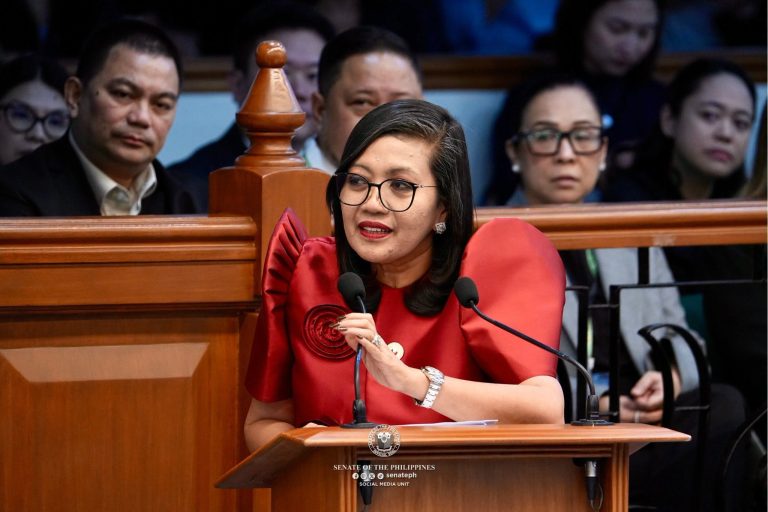
NEWLY appointed House of Representatives spokesperson Atty. Priscilla Marie “Princess” Abante on Tuesday urged the public not to rely too heavily on survey results when assessing public opinion on sensitive political issues, particularly the upcoming impeachment trial of Vice President Sara Duterte in the Senate this June.
“Siguro kung meron tayo natutunan ngayong eleksyon ay hindi naging tugma ang mga naging datos ng mga survey prior to elections doon sa actual na resulta,” Abante said in an interview when asked about a recent Pulse Asia survey showing 50 percent of respondents opposing the filing of the impeachment complaint.
She noted that the results of the 2025 senatorial elections alone should encourage people to think twice about treating survey results as absolute.
“May mga nakita tayong consistent na nasa winning circle sa surveys all throughout the campaign period na hindi natin nakitang nagtagumpay,” she said.
At the same time, she cited the emergence of winning candidates who were barely visible in pre-election surveys, saying this should be a wake-up call for those who take survey data at face value.
“Merong mga surprise victors na hindi rin na lumalabas sa mga surveys,” Abante added.
Among those who were consistently projected to win but did not make it to the Senate were Ben Tulfo, Willie Revillame, Abby Binay and Bong Revilla. Conversely, candidates like Bam Aquino, Kiko Pangilinan, Rodante Marcoleta and Imee Marcos, who were not leading in surveys, emerged as winners in the actual elections.
As spokesperson for the House, Abante emphasized the importance of listening directly to the people, rather than relying solely on statistical representations.
“So I would be very careful in reading too much right now on the surveys,” she said.
According to Abante, policymakers and political leaders must go beyond interpreting data and learn to engage more meaningfully with constituents.
“We need to understand not just ano ‘yung pakiramdam ng mamamayan ayon sa survey pero mas kailangan bumaba tayo sa tao para mas maintindihan ano ‘yung talagang totoong pangangailangan nila,” she said.
Abante explained that public sentiment is far more complex than what survey data can capture, and the nuances of voter priorities and concerns are often lost in data sets.
“Hindi lang ayon sa mga samples ng data na nakukuha natin,” she said.
About the Author