THE Dy-led House of Representatives on Wednesday gave its strongest assurance yet that the long-delayed Motorcycle (MC) Taxi Law will finally be passed in the 20th Congress, with senior lawmakers committing to deliver a legal framework for MC taxis and transport network vehicle services (TNVS).
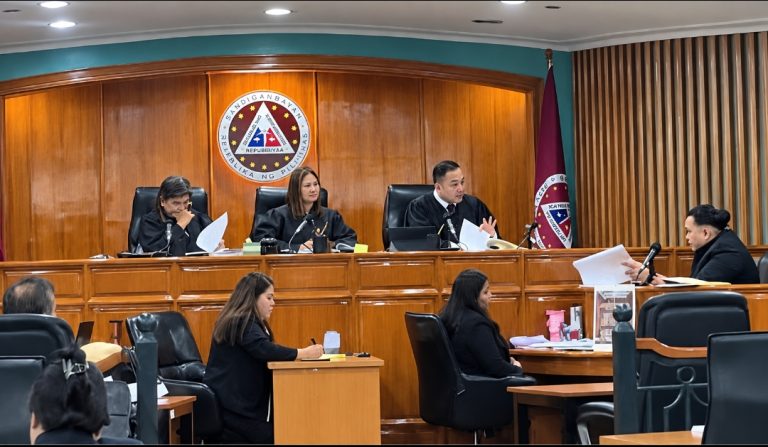
The commitment was made during a hearing of the Legislative Energy Action Development (LEAD) Joint Committee hearing, where lawmakers are tackling the impact of rising fuel prices on key sectors, including transportation workers whose earnings are directly affected by daily fuel costs and platform commissions.
House Committee on Ways and Means chair Marikina City Rep. Miro Quimbo, who presided over the hearing, said the push to institutionalize MC taxis and TNVS is part of a broader effort to provide structural, long-term solutions rather than short-term aid to sectors hit hardest by the fuel crisis.
Invoking the directive of Speaker Faustino “Bojie” G. Dy III, Quimbo gave a firm assurance that the measure will be completed within the current Congress.
“Basta ito ang pinapangako namin sa inyo sa harap ng ating mga kasama na sinasabi ni Speaker Bojie Dy na sa kongresong ito tatapusin natin ang batas patungkol sa MC taxi, TNVS para magkaroon na talaga ng katiyakan dyan dahil napakatagal na po nating naghahanap ng katahimikan dyan. ‘Yan po ang isang bagay na talagang itinutulak natin,” Quimbo said.
Quimbo added that with Committee on Transportation chair Quezon City Rep. Franz Pumaren present, the passage of the twin measures would be a defining test of House leadership.
Pumaren echoed the assurance, stressing that the MC taxi bill is already in its final stages. He noted that the 20th Congress is still less than a year into its term, with another hearing scheduled on April 28.
“As chairman of the Committee on Transportation, I will give my full assurance na papasa po ‘yan dito sa Kongreso,” Pumaren said.
The assurances from House leaders came after an emotional manifestation from MC taxi leader Romeo Godoy Maglunsod, who appealed to lawmakers to finally pass the measure after years of delay across multiple Congresses.
Maglunsod said the proposed law has repeatedly stalled despite being taken up since the 17th Congress, leaving more than 200,000 riders in legal uncertainty.
He emphasized that riders are not asking for dole-outs but for reforms that would allow them to earn fairly, citing the need to lower fuel costs, reduce platform commissions, and establish a stable regulatory environment.
He also highlighted the lack of access to basic social protections such as SSS, Pag-IBIG, and PhilHealth among riders, underscoring the urgency of passing the law to formalize their status and provide safeguards.
The proposed MC Taxi Law seeks to formally recognize and regulate MC taxis as a legitimate mode of public transportation, setting standards for accreditation, safety, fares, insurance, and working conditions.
For years, MC taxis have operated under pilot programs overseen by the Land Transportation Franchising and Regulatory Board, with platforms serving millions of commuters, particularly in congested urban areas.
However, the absence of a permanent law has left the sector in a state of regulatory uncertainty, with riders lacking clear labor protections and operators subject to evolving rules.
The measure is also being aligned with reforms covering TNVS, which include app-based ride-hailing services using cars.
Like MC taxis, TNVS drivers face issues related to fare regulation, commission rates, and classification.
Consolidating these reforms will provide a comprehensive framework that ensures commuter safety while protecting the livelihood of drivers and riders.
The discussion of the MC Taxi law within the LEAD Council underscores how the ongoing fuel crisis has exposed deeper structural gaps in the transport sector.
House members noted that while cash aid and fuel subsidies provide temporary relief, sectors like MC taxi riders and TNVS drivers require long-term solutions that stabilize income and reduce vulnerability to price shocks
About the Author