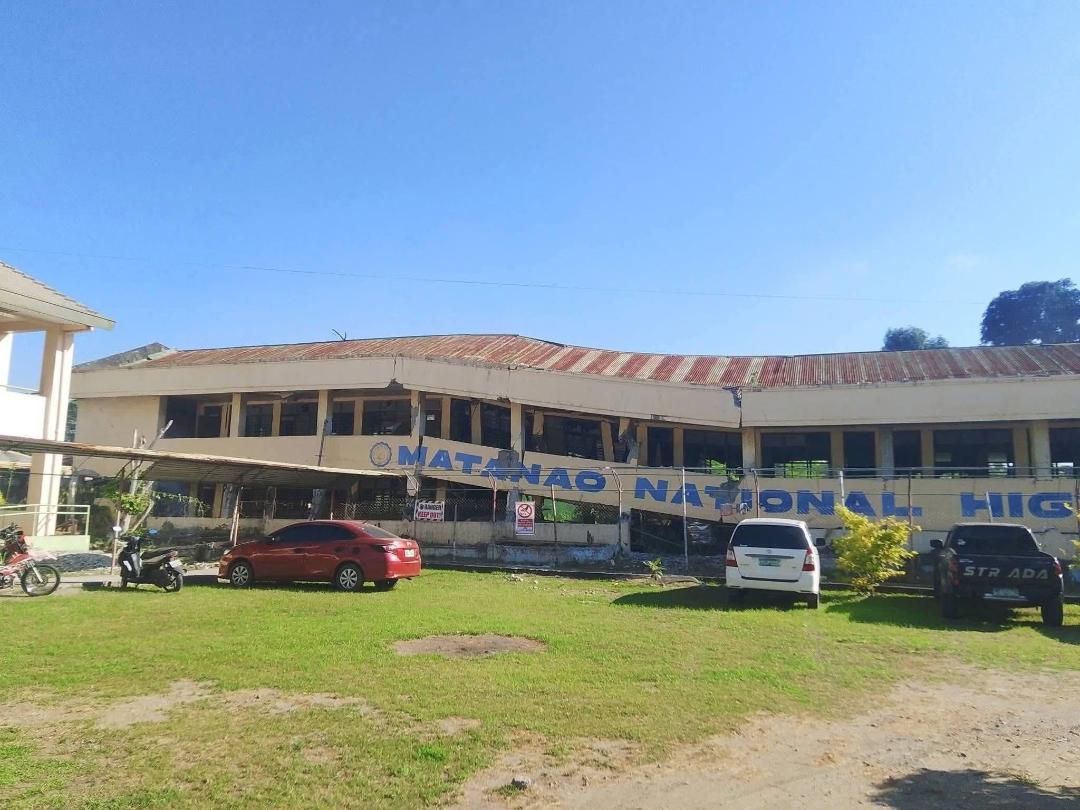
THE Department of the Interior and Local Government (DILG) has directed affected local government units (LGUs) to immediately inspect buildings, public infrastructure, and residential houses to help ensure the safety of communities as aftershocks continue.
Through an advisory issued to Governors, City and Municipal Mayors, and DILG Regional and Provincial Directors in Regions IX, XI, and XII, the Department called on Building Officials, City and Municipal Engineers, and other concerned offices to conduct rapid structural assessments of affected structures, particularly those located in heavily impacted areas or showing visible signs of damage.
The DILG stressed that buildings must be assessed and cleared before people are allowed to return. Where structures are found to be unsafe, LGUs are advised to take immediate protective measures, including evacuation and temporary relocation, to prevent further risk to residents.
The Department also directed LGUs to closely coordinate with the DPWH, DOST-PHIVOLCS, BFP, and local Disaster Risk Reduction and Management Offices (DRRMOs) in carrying out inspections, validating damage reports, and implementing necessary interventions.
The advisory is aligned with the DILG’s continuing implementation of its Infrastructure Audit (IA) Program, which helps equip LGUs with the tools and capacity to assess the structural integrity of public infrastructure.
A key component of the program is the Harmonized IA Tool, developed in consultation with various stakeholders. The tool provides LGUs with a standardized and science-based framework for evaluating the condition and safety of government facilities.
To date, the DILG has trained 854 LGUs nationwide on the proper use of the Harmonized IA Tool, including 208 LGUs in Mindanao.
As of May 15, 2026, the IA Program has recorded 3,302 LGU-owned buildings across Mindanao, with most already undergoing rapid visual screening and detailed building inspections.
According to the Department, these assessments enable local governments to identify facilities that may need further structural evaluation, corrective maintenance, or other interventions to ensure public safety and the uninterrupted delivery of essential services.
“While earthquakes cannot be predicted, their impacts can be reduced through sound engineering, proactive governance, and regular infrastructure assessments,” the Department said.
About the Author