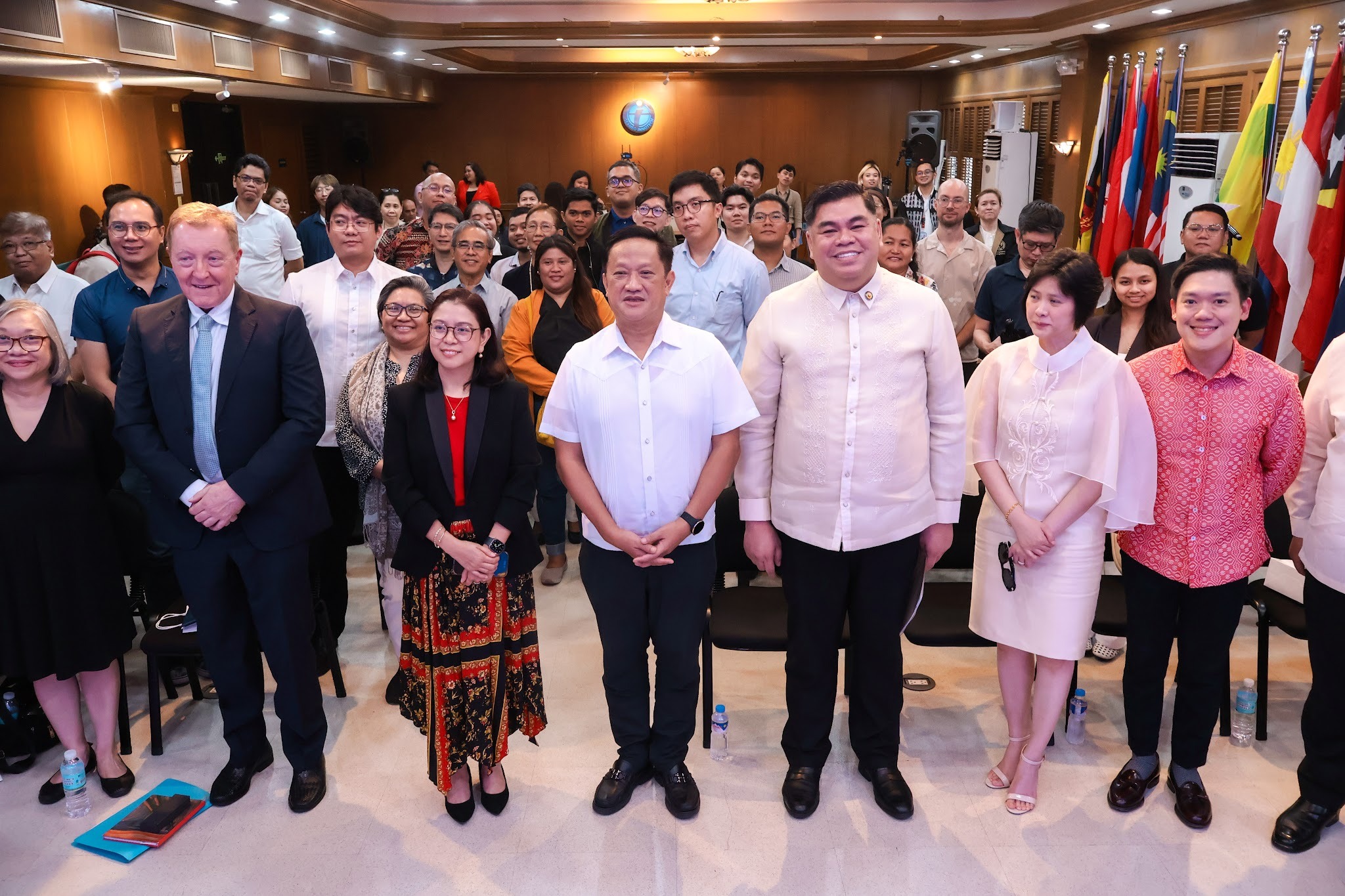
EDUCATION leaders from the Philippines and abroad underscored the need for stronger coordination across sectors and a sustained commitment to evidence-based policymaking to address persistent learning challenges during the Regional Forum on Education and Learning organized by SEAMEO-INNOTECH and the University of the Philippines Center for Education and Development.
The forum featured Dr. Marie Therese Angeline P. Bustos, Professor at the College of Education of the University of the Philippines Diliman; Dr. Akihiro Fushimi, Education Chief of UNICEF Philippines; Dr. Martin Hayden, Emeritus Professor of Higher Education at the School of Education of Southern Cross University in Australia; and Dr. Dina S. Ocampo, Professor at the College of Education of the University of the Philippines Diliman.
Dr. Akihiro Fushimi emphasized that improving learning outcomes requires a more integrated approach that connects education with the broader ecosystem of services that support child development.
“A child is not divided by departments. The missing link in the Philippine education system is the lack of real coordination across the board—one that connects education, health, social protection from national, province, municipal, and barangay-level,” Fushimi said.
His remarks echoed one of the key findings of the Second Congressional Commission on Education (EDCOM 2) that many barriers to learning originate outside the classroom and require coordinated action across agencies and levels of government.
Over the past three years, EDCOM 2’s assessment of the education sector found that challenges in nutrition, health, learner welfare, and early childhood development continue to affect learning outcomes. In its Final Report, the Commission noted that 23.6% of Filipino children remain stunted, while participation in early childhood education remains low at only 30%, limiting children’s readiness to learn, and contributing to later learning gaps.
For Dr. Marie Therese Angeline P. Bustos, confronting these challenges begins with acknowledging the realities faced by Filipino learners.
“When we visited a school in Baseco, we saw Grade 5 learners who looked like they were in Grade 1. They are stunted and in need of remediation. We can definitely see the crisis on the ground,” Bustos said.
“But, I believe that there is hope because we now have information to tell us that we are not okay. I think that’s the first step in fixing a broken system,” she added.
EDCOM 2 Executive Director Karol Mark Yee echoed this, emphasizing the importance of transparency and evidence in driving reform.
“We have these reports because we’ve accessed the data. There needs to be a continued call for release or transparency of information so that it can be analyzed, even if not by the entire public, at least by scholars who can really scrutinize and draw insights so that it informs policy and intervention well. Because unless we diagnose well, how can we actually solve things with the resolve it requires?” Yee said.
Yee noted that one of the most important lessons from EDCOM 2’s work has been the value of making data accessible and actionable. Through access to education data across agencies and extensive consultations with teachers, school leaders, learners, and communities, the Commission was able to better understand the root causes of the country’s learning crisis and identify reforms grounded in evidence.
The discussion concluded on a hopeful note, with Dr. Dina S. Ocampo emphasizing the enduring role of educators in driving change despite the scale of the challenges facing the education system.
“I believe we have hope. We are teachers because we believe in development,” Ocampo said.
In his closing remarks, EDCOM 2 Co-Chairperson Rep. Jude Acidre challenged participants to move beyond diagnosis and turn evidence into action.
“The challenge before us now is to turn these reports into action, action into results, and results into better futures for our learners and our nation. That work begins now, and it belongs to all of us. With courage, determination, and shared purpose, we can build an education system that gives every Filipino child the chance to learn fully, grow freely, and live with dignity, opportunity, and hope.”
The forum highlighted a shared message among education leaders: while the challenges facing Philippine education remain significant, a clearer understanding of the crisis, stronger collaboration across sectors, and sustained commitment to evidence-based reform provide a unique opportunity to improve learning outcomes for every Filipino child.
About the Author