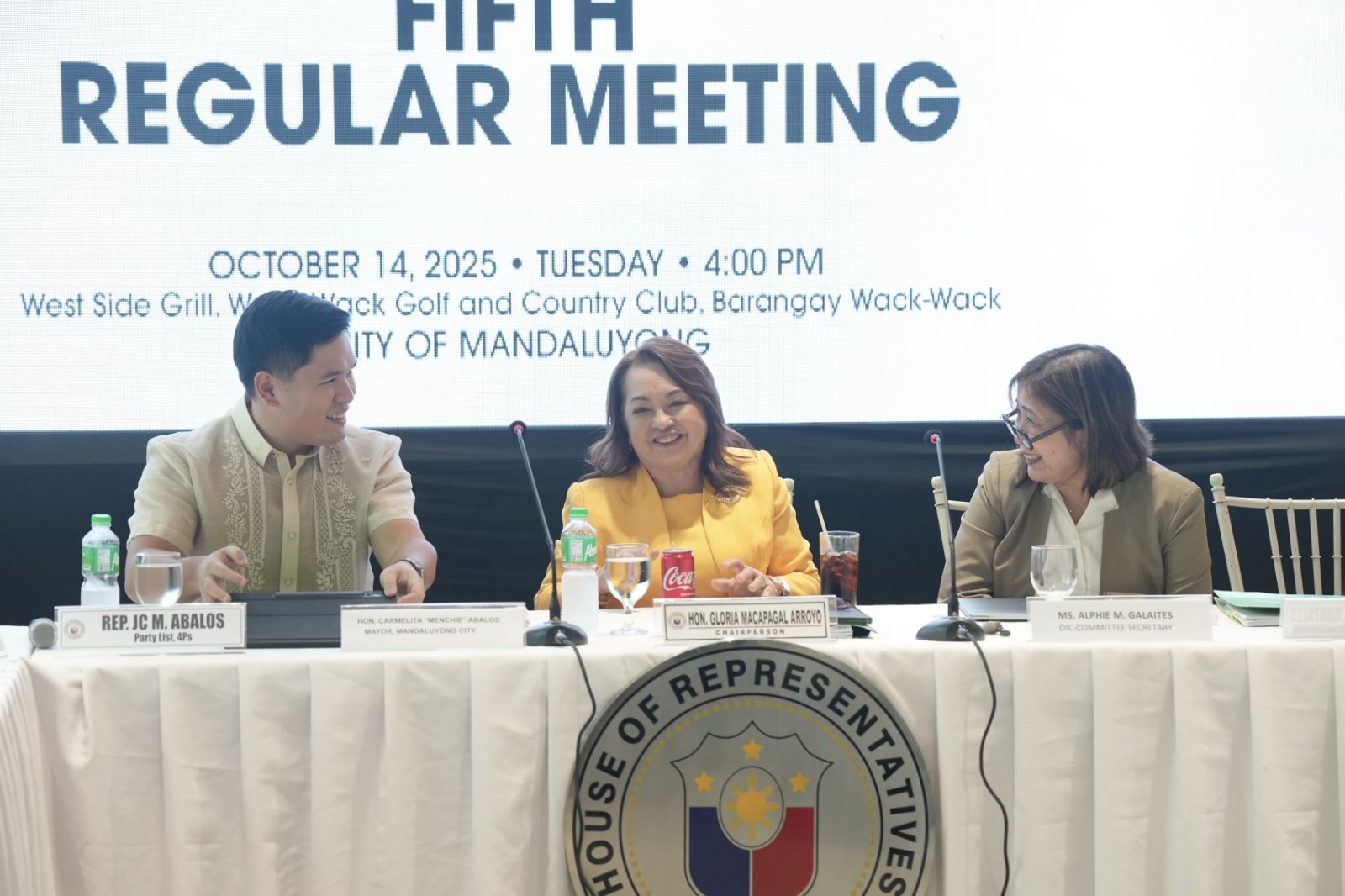
THE House Committee on Poverty Alleviation, chaired by Pampanga Rep. Gloria Macapagal-Arroyo, convened on Tuesday to explore ways to improve the sharing and utilization of local poverty data generated through the Community-Based Monitoring System (CBMS).
The CBMS, established under Republic Act No. 11315, serves as a comprehensive data collection framework aimed at producing localized poverty statistics to guide social protection initiatives, policy development, and targeted government interventions. Data gathered through the CBMS also serve as key inputs to the poverty reports of the Philippine Statistics Authority (PSA).
It is hoped that the localized poverty statistics generated through the CBMS can help guide the design of more grounded social protection programs, improve policy formulation, and lead to more targeted government interventions.
Based on the data gathered, the PSA report provided insights into living conditions and socioeconomic indicators in the urban environment that is Mandaluyong City. Data gathered include percentage of households with electricity, with access to internet, water supply, drinking water, toilets, among others.
During the discussions, 4Ps Partylist Rep. JC Abalos proposed the creation of an oversight committee to oversee the implementation of the CBMS.
The Committee also formed a Technical Working Group (TWG) to be headed by Mountain Province Rep. Maximo Dalog Jr. to consolidate several measures seeking to institutionalize the Community-Driven Development (CDD) approach as a national strategy for inclusive growth and social protection. The bills to be merged are House Bills 67, 1248, 1530, 1943, 2537, 3403, 4012, 4048, and 4961.
Also present during the hearing were officials from the Department of Social Welfare and Development (DSWD), Department of Budget and Management (DBM), Liga ng mga Barangay (LBP), Samahan ng Nagkakaisang Pamilya ng Pantawid and Philippine Institute for Development Studies (PIDS).
The Committee is set to meet again on October 28 to discuss the implementation of the CBMS in a rural setting.
About the Author