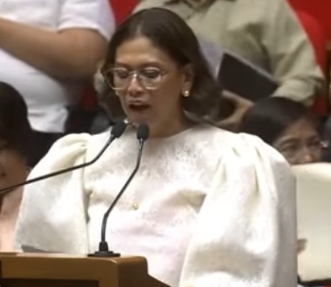
MARIKINA City 2nd District Rep. Stella Luz Quimbo has countered Agriculture Secretary Francisco Tiu Laurel Jr.’s claim that the Department of Agriculture (DA) is powerless to address soaring rice prices, citing clear legal provisions granting the agency enforcement authority.
Speaking during Wednesday’s hearing of the House Quinta Comm, also known as the Murang Pagkain Super Committee, Quimbo said the DA has significant powers under the Price Act and the amended Rice Tariffication Law to act against price manipulation, hoarding, profiteering and cartels in the rice industry.
“In other words, huwag niyo po sanang sasabihin na wala po kayong kapangyarihan na habulin ang mga taong nagsasabwatan at pinapataas ang presyo ng bigas dahil hindi po totoo ‘yan,” Quimbo told DA Undersecretary Asis Perez, who represented Laurel during the latter part of the hearing.
Laurel, who was present earlier in the hearing, claimed the DA lacked authority to address high rice prices and urged Congress to pass legislation granting the agency stronger powers against price manipulation, profiteering and other exploitative practices in the agricultural sector.
Quimbo, however, pointed to Section 10 of the Price Act, which she said clearly empowers the DA as the implementing agency for rice. The law allows the department to conduct investigations, impose fines of up to P1 million, seize basic necessities and initiate prosecutions.
“Nakasulat po dito, kayo ay implementing agency and pwede kayong mag-conduct ng investigation, pwede po kayong magmulta. ‘Yun po ang naka-indicate dito. Tama?” Quimbo asked.
Perez replied, “If it’s in the law, then that’s it, Madam Chair.”
Quimbo questioned why rice prices remain high despite an oversupply and tariff reductions under Executive Order (EO) No. 62, which cut import duties from 35% to 15%.
She cited data showing that the landed cost of rice had decreased from P34.21 per kilogram in July to P33 in December.
Refuting Laurel’s assertion that a weaker peso offset the reduction, Quimbo said, “The world price of rice dropped enough to offset the peso’s depreciation. The weakening of the peso is not a valid excuse.”
Department of Finance Director Jolly La Rosa supported Quimbo’s claim, agreeing that the global drop in rice prices outweighed the peso’s depreciation.
Quimbo reminded the DA of its authority under the amended Rice Tariffication Law, which allows the agency to declare a food security emergency and use P5 billion in funds to stabilize rice prices.
“You can use P5 billion to intervene in the market. Puwede kayong mag-import at gamitin ‘yan, ibenta ninyo katulad ng ginagawa niyo today, magbenta ng bigas at P42,” she said.
She also stressed the DA’s ability to collaborate with other entities, such as the Philippine Competition Commission (PCC), under its existing Memorandum of Agreement.
“Please confirm that you also see it in the law. And in addition, you may deputize and enlist the assistance of any government official or agency in carrying out the provisions of this Act,” Quimbo said.
Quimbo urged the DA to exercise its full authority and hold traders accountable for unjustified price hikes.
“Huwag na huwag po natin sasabihin sa ating mga kababayan na kayo po ay powerless,” she reiterated.
While commending Laurel for his cooperative relationship with her constituents in Marikina, Quimbo clarified that her remarks were intended to ensure a clear understanding of the DA’s legal responsibilities.
“Nagka-clarify lang po tayo, baka may misunderstanding lang tayo patungkol po sa batas,” she said.
The Quinta Committee, created by virtue of House Resolution 2036 introduced by Speaker Martin G. Romualdez and Senior Deputy Speaker Aurelio Gonzales Jr., is composed of the House Committees on Ways and Means, on Trade and Industry, on Agriculture and Food, on Social Services, and the Special Committee on Food Security, with Ways and Means panel chair Rep. Joey Salceda leading the inquiry.
The Quinta Comm continues its inquiry into the root causes of high rice prices, with a focus on government enforcement and market inefficiencies to protect Filipino consumers.
About the Author