SULTAN Kudarat 2nd District Rep. Horacio Suansing Jr. on Wednesday flagged significant discrepancies in rice importation records involving Davao-based businessman Stewart Santiago and his companies, Nance II AgriTraders and Davao Solar Best Corporation.
Suansing called for investigations by the Bureau of Internal Revenue (BIR) and the Philippine Competition Commission (PCC) to ensure accountability and transparency in the rice importation process.
The House Quinta Comm, also known as the Murang Pagkain Super Committee, is currently probing rice importers amid concerns of irregularities affecting market stability and government revenues.
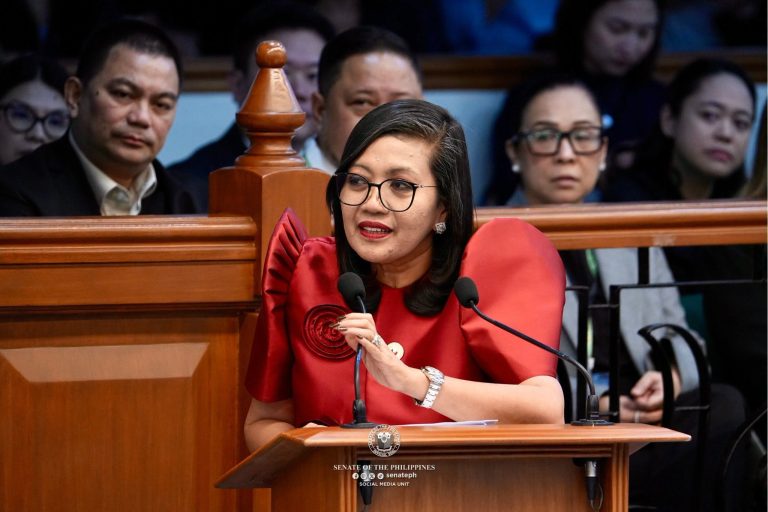
Suansing’s revelations were among the key points raised during Wednesday’s hearing, where he highlighted mismatched data between the Bureau of Customs (BOC) and the Bureau of Plant Industry (BPI).
While the BPI issued Sanitary and Phytosanitary Import Clearances (SPSICs) for only 48,852 metric tons in 2022, BOC records showed that Santiago’s companies imported a total of 348,011 metric tons, resulting in a discrepancy of 299,159 metric tons.
“Per BOC records, Nance II and Davao Solar Best imported a total volume of 348,011 metric tons. But the problem, Mr. Chair, as per BPI data, they were only issued SPSICs for 48,852 metric tons. There is a discrepancy of 299,159 metric tons. Hindi ito nadeklara. May discrepancy,” Suansing pointed out during the hearing.
The solon underscored that such irregularities could reflect deeper systemic issues in import regulation, potentially enabling large-scale misdeclarations and abuse of government-issued clearances.
“‘Pag tinotal mo itong dalawang korporasyon, meron 299,159 metric tons na discrepancy. Para sa akin, Mr. Chair, kailangang ayusin ito,” he stressed.
Suansing also pressed Santiago on whether his companies were paying the correct taxes.
Records presented at the hearing showed that Nance II AgriTraders and Davao Solar Best paid P2.8 billion in duties and taxes in 2023, with smaller amounts in prior years.
Santiago claimed his companies operate on slim margins of P1 to P1.50 per kilogram of imported rice, relying on high volumes for profitability.
“Per our record, in 2021 and 2022, your two companies paid only P650 million in duties and taxes. In 2021, you paid P1.6 billion. In 2022, you paid P2 billion. In 2023, it’s P2.8 billion,” Suansing noted.
“Kung piso lang ang kita per kilo, patingnan natin sa BIR kung ang piso na ‘yan, deklarado,” Suansing said, urging the tax bureau to verify the accuracy of the companies’ financial declarations.
BIR representatives assured the committee that they were actively reviewing tax records of major rice importers and would recommend appropriate actions based on their findings.
Suansing also grilled the Department of Agriculture (DA) and the BPI for lapses in monitoring rice imports.
He cited automatic SPSIC approvals during the previous administration as a potential enabler of irregularities, such as the recycling of import permits.
“Hindi pwede na ganito ang laki ng discrepancy. Ano sa tingin mo, Mr. Santiago? Bakit mas malaki ang volume ng importation mo per records of Customs vis-à-vis sa record ng BPI?” he asked.
While DA officials acknowledged that automatic approvals may have contributed to discrepancies, Suansing dismissed this as an insufficient explanation for the significant mismatch in import data.
Highlighting Santiago’s influence in the rice market, Suansing noted that Nance II AgriTraders and Davao Solar Best collectively control about 10% of the country’s rice imports.
He called on the PCC to investigate potential anti-competitive behavior by the companies.
“Ito kasing number one ang Nance II, number six itong Davao Solar Best. Pag kinumbine mo sila, halos 10% ng buong importation ng Pilipinas hawak nila. So I would like to solicit the comment of the [PCC],” Suansing said.
The PCC committed to review the companies’ activities and submit their findings to the committee.
In concluding his interpellation, Suansing underscored the importance of addressing these irregularities to protect consumers and stabilize the rice market.
“At least nakita natin ito… Sa tingin ko, kailangan ayusin ito,” he said.
The Quinta Committee is expected to hold follow-up hearings to ensure proper oversight and formulate stricter policies on rice importation. Updates from the BIR, PCC and DA will be critical in resolving these issues.
About the Author