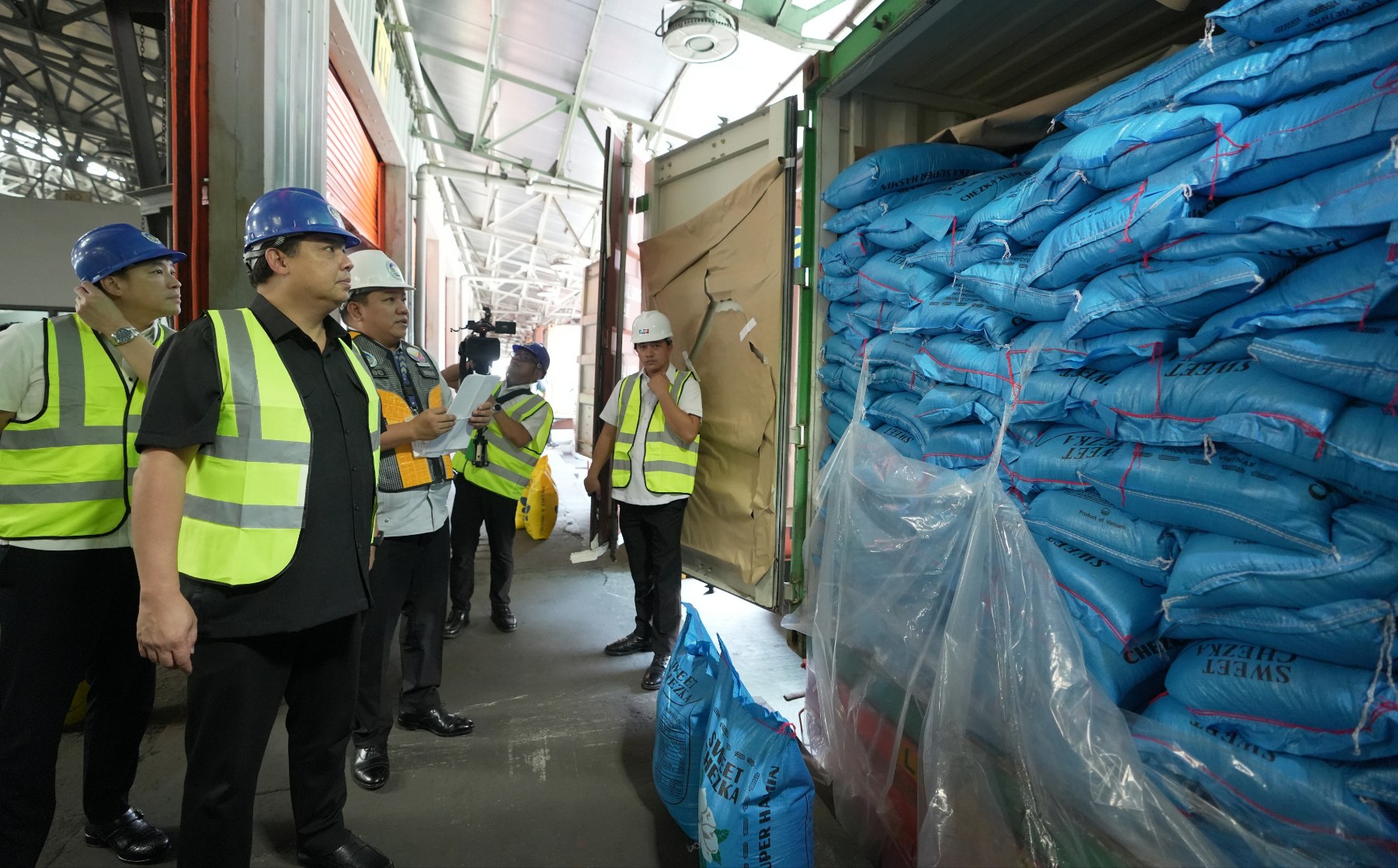
Speaker Ferdinand Martin G. Romualdez, together with Custom Commissioner Bienvenido Rubio, Deputy Majority Leader Erwin Tulfo, ACT-CIS Party-list Rep. Eric Yap and other Custom officials, inspects the overstaying container vans full of imported rice at the Manila International Container Terminal, Port Area Manila Wednesday (Sept. 25, 2024). The Speaker warned that “rice hoarding, smuggling, and other illegal activities that threaten the accessibility and affordability of our staple grain will not be tolerated.”
SPEAKER Ferdinand Martin G. Romualdez led an on-site inspection at the Manila International Container Port (MICP) on Wednesday afternoon following reports of over 800 containers containing approximately 23 million kilos of imported rice that have allegedly been overstaying in the port.
He said the inspection is part of the House of Representatives’ sustained efforts to combat rice hoarding and smuggling, ensuring Filipino consumers have access to affordable rice, in line with the administration of President Ferdinand R. Marcos Jr.’s broader strategy to stabilize rice prices and secure the nation’s food supply.
“We are here to send a clear message: rice hoarding, smuggling, and other illegal activities that threaten the accessibility and affordability of our staple grain will not be tolerated,” said Romualdez, leader of the 300-plus members House of Representatives.
The Speaker was accompanied in the container yard inspection by Deputy Majority Leader Erwin Tulfo, ACT-CIS Party-list Rep. Edvic Yap and Bureau of Customs officials led by Commissioner Bienvenido Rubio.
According to the Speaker, the reports on the overstaying rice containers add to growing concerns over the manipulation of rice supply in the market, which has contributed to rising prices, undermining the government’s objective of ensuring food security, especially for vulnerable sectors.
Romualdez appealed to importers to refrain from taking advantage of the full 30-day period before withdrawing their rice shipment saying it is tantamount to hoarding and would adversely affect ordinary consumers as it would artificially drive prices up.
Section 1129(d) of the Customs Modernization and Tariff Act, mandates that shipments should be claimed within 30 days and should be cleared from payment of duties and taxes.
“Magtulungan na lang tayo imbes na mag-isip kayo na tataas yung profit ninyo at the expense ng ating consumers,” he said.
According to records of the Bureau of Customs, there are 523 containers of imported rice currently in the yard of MICP, with each container bearing 25 metric tons of rice, with average value of P750,000 per container.
Speaker Romualdez recalled there were some complaints of rice shortage of during previous market visits he conducted, but the inspection showed a large volume of imported rice available.
However, he said some importers are apparently taking advantage of the reglementary period before withdrawing their stocks.
“Parang hoarding din ito pero ginagamit ang facilities ng gobyerno, dahil mas mura dito,” he added.
It could be recalled that Speaker Romualdez previously led a series of surprise inspections of rice warehouses in Bulacan amid reports of hoarding to jack up rice prices.
He said President Marcos Jr.’s Executive Order No. 62, which mandates a reduction in tariffs on imported rice to bring down the price, would be rendered futile if imported rice is hoarded or not released in a timely manner for public consumption.
He called on all relevant authorities to expedite the release of the rice containers and ensure that any individual or group involved in the illegal withholding of rice is held accountable.
BOC officials said the agency is dedicated to processing rice shipments efficiently to stabilize market prices and maintain a steady supply of this crucial commodity and has urged consignees to act promptly to expedite the immediate distribution of rice and prevent avoidable delays.
They added that BOC is committed to guaranteeing the seamless and timely processing of all shipments in compliance with customs regulations and is prepared to collaborate with stakeholders to resolve any issues.
The BOC earlier warned that shipments exceeding the 30-day period will be declared abandoned and can be seized by the government and disposed of through auction or donation to an appropriate government agency, such as the Department of Social Welfare and Development .
About the Author