A HOUSE leader on Monday exposed a “systematic and deliberate scam” involving thousands of “bogus” acknowledgment receipts (ARs) used to justify the alleged misuse of P612.5 million in confidential funds entrusted to Vice President Sara Duterte.
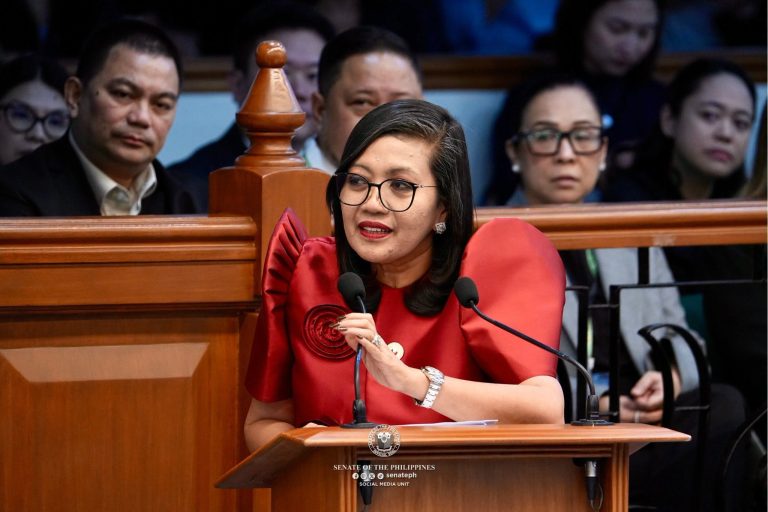
“Tayo po ay na-scam sa pamamagitan ng libo-libong [ARs] na basta-bastang dinoktor at gawa-gawa lang,” Assistant Majority Leader and Lanao del Sur 1st District Rep. Zia Alonto Adiong said during his presentation before the House Committee on Good Government and Public Accountability, also known as the House Blue Ribbon Committee.
Adiong disclosed the emergence of new fabricated names, including “Milky Secuya,” “Alice Crescencio,” “Sally,” and “Shiela,” adding to the previously flagged “Mary Grace Piattos,” whose name has become a symbol of the controversy.
The lawmaker accused the Duterte-led Office of the Vice President (OVP) and the Department of Education (DepEd) of manufacturing almost 5,000 ARs to cover up what he called a systematic misuse of public funds.
He highlighted how P125 million in confidential funds allocated to the OVP for December 21 to 31, 2022, was backed by receipts riddled with irregularities, including dates outside the funding period, forged signatures and nonexistent names.
Adiong presented compelling details from the committee’s investigation, revealing that many of the ARs were tied to individuals who do not exist.
Among the fabricated names, “Milky Secuya” signed two ARs on the same day with the same pen and ink, yet with entirely different signatures.
Similarly, “Alice Crescencio” appeared on three separate receipts allegedly issued in Pasay City, Iligan City and Lanao del Sur—locations that are geographically impossible to visit simultaneously.
“Itong pangalan po na ito ay hindi pangkaraniwan, and the chances of three different ‘Alice Crescencios,’ all receiving confidential funds for different purposes from the DepEd, is extremely slim,” Adiong said, as he dismissed any claim of coincidence.
Adding to the growing list, Adiong flagged the names “Sally” and “Shiela,” whose receipts featured identical signatures despite supposedly belonging to two individuals from cities over 400 kilometers apart.
“It makes you think: what are the chances that two different people, from Digos City and Surigao City, have the exact same signature?” Adiong asked.
The lawmaker also revisited “Mary Grace Piattos,” whose name he previously described as a bizarre combination of a restaurant chain and a snack brand. Verification by the Philippine Statistics Authority (PSA) confirmed that no person with this name exists.
Adiong further noted discrepancies tied to “Kokoy Villamin,” who was listed as a recipient of confidential funds from both the OVP and DepEd.
Villamin’s signatures varied significantly across receipts, and a PSA check revealed no record of such a person. “Hindi talaga ito totoong tao,” Adiong said of Villamin.
In total, the PSA verified that 405 out of 677 names listed on DepEd’s ARs did not exist, raising further questions about the authenticity of the remaining receipts.
Adiong likewise pointed to the use of a distinctive shade of blue ink across several receipts, which he argued was evidence that the documents were fabricated by a single individual.
“Ang mas kapanipaniwala ay only one person made these [ARs],” he said, adding that the handwriting on many receipts bore striking similarities despite being attributed to different individuals.
Some receipts even showed altered handwriting styles, but the same signature repeatedly appeared, further suggesting forgery.
Adiong also noted that these fraudulent ARs violated provisions under Joint Circular 2015-001, which governs the use and documentation of confidential funds.
The rules require acknowledgment receipts to be stored in a secure vault and submitted in a sealed envelope. However, the fabricated nature of the receipts rendered these safeguards meaningless.
“Para sa’n pa kaya ang security measures in place sa Joint Circular kung code names lang rin pala ang gagamitin?” Adiong asked, rejecting OVP representatives’ claims that the fabricated names were “code names” for confidential operations.
He also highlighted that many ARs bore dates outside the funding period, with some dated months before or after the funds were allocated.
Adiong did not hesitate to hold Vice President Sara Duterte accountable, directly implicating her in what he called a “mastermind operation.”
According to Adiong, the funds were handed over to two members of Duterte’s security team, after which the money disappeared. The ARs, he alleged, were then fabricated to satisfy audit requirements.
“There is only one person in the middle of the issues surrounding the anomalous utilization of confidential funds—the mastermind, Vice President Sara Duterte,” he said.
Adiong concluded his presentation by urging lawmakers to address the systemic gaps in the management of confidential funds to prevent future abuses.
He emphasized the need for accountability and transparency in public spending.
“If we, as lawmakers, do not address these gaps in the law, we risk enabling further abuses of power,” Adiong warned. “This is exactly what we, as lawmakers, have done here.”
About the Author