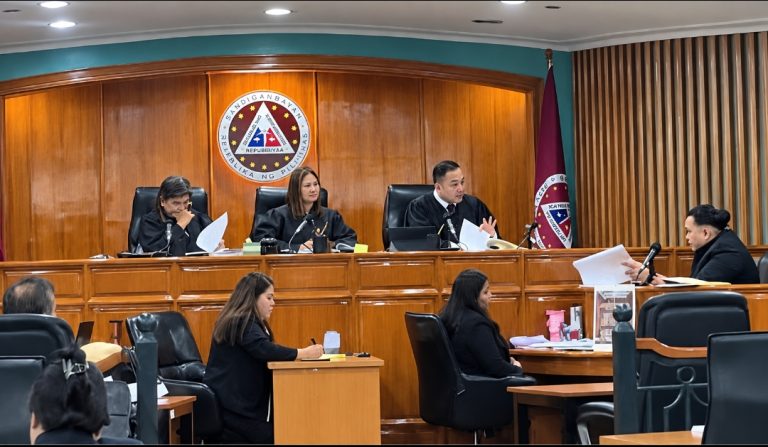
HOUSE Senior Deputy Minority Leader and Mamamayang Liberal (ML) Partylist Rep. Leila de Lima has filed twin measures to provide more support for fisherfolk and farmers, who remain among the poorest sectors in the country.
De Lima introduced House Bill No. 9272, which seeks to create the Department of Fisheries and Aquatic Resources as the primary policy and regulatory body on fisheries and aquatic resources in the country.
“While the existence and efforts of the Bureau of Fisheries and Aquatic Resources (BFAR), the agency attached to the Department of Agriculture (DA) that is currently spearheading initiatives for the fisheries sector, are duly recognized, the creation of a separate department would provide the much-needed specialized attention to the needs and concerns of the fisheries and aquatic resources industry and sector,” De Lima said.
“Unlike the current Bureau, the Department proposed in this bill shall have its own budget and autonomy to formulate and enforce policies and measures on matters concerning fisheries and aquatic resources. At the same time, this would allow the DA to focus on the various challenges of land-based farming that also pose threats to the country’s food security,” she added.
In pushing for HB 9272 or the “Department of Fisheries and Aquatic Resources Act”, which largely adopts Senator Kiko Pangilinan’s Senate Bill No. 221, De Lima underscored the need to address gaps in existing laws and policies affecting the fisheries sector, as data continue to show lagging implementation and declining fish stocks.
Meanwhile, the Bicolana lawmaker also filed HB 9273 or the “Post-Harvest Facilities Support Act of 2026” which aims to boost local rice production by mandating the construction of warehouses and rice mills in every rice-producing municipality and city in the country.
Under this bill, the House counterpart version of Sen. Pangilinan’s SB 222, every district with at least one rice-producing municipality shall be a mandated beneficiary of at least one warehouse and rice mill in the initial phase of the program.
Additionally, the Department of Trade and Industry (DTI), in consultation with the DA, the Department of Agrarian Reform (DAR), and farmer cooperatives, shall provide the equipment and machinery required to operate these warehouses and rice mills such as flatbed dryers and threshers, as well as the necessary transport facilities.
“Despite the numerous laws that recognize the need for post-harvest facilities and mandate their construction and development, our country’s agriculture sector continues to face significant challenges on food security, productivity, profitability, and competitiveness,” De Lima pointed out.
“Dahil sa kakulangan sa post-harvest facilities, yung dagdag na kita, naglalaho pa. Malinaw: Mula sa pagtatanim, bago at habang anihan, hanggang sa pagdadala ng produkto sa merkado, dapat may suporta ang gobyerno sa magsasaka,” she added.
In 2024, the DA reported that the Philippines loses an average of 342,000 metric tons of rice, equivalent to P7.89 billion in post-harvest losses annually. The agency attributed these losses primarily to the country’s inadequate supply chain infrastructure.
According to De Lima, the government must ensure that formulation and implementation of initiatives affecting the farmers and fisherfolk are truly responsive to the urgent needs of these sectors.
“Nasaan ang hustisya kung ang mga magsasaka at mangingisda na naghahatid ng pagkain sa hapag ng bawat pamilya at nangunguna sa laban para sa food security at food sufficiency, ay sila pa ang napag-iiwanan sa lipunan?” the solon asked.
“Our farmers and fisherfolk deserve better services and more support, and the government should step up with urgency to ensure they receive them,” she added.
About the Author