THE Philippines must focus on generating less garbage and recovering more reusable materials instead of relying mainly on expanded waste disposal facilities, House Committee on Ecology Chair Aniela Bianca D. Tolentino said Monday.
Tolentino made the call after Naic Mayor Rommel Magbitang appealed for national government assistance over the municipality’s mounting garbage problem, which she said should serve as a warning about the country’s worsening solid waste crisis.
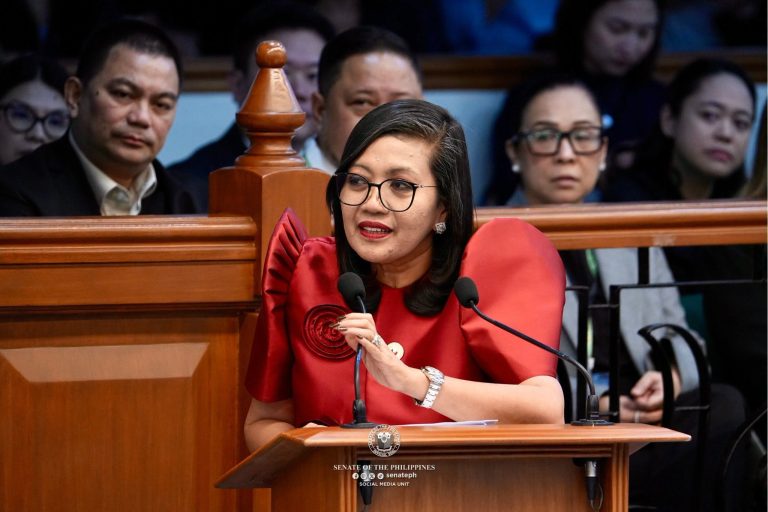
In a privilege speech, Tolentino said the government cannot solve the problem simply by finding better ways to dispose of increasing volumes of waste.
“The goal should not simply be to collect more garbage. The goal should be to generate less, recover more, and ensure that only residual waste proceeds to treatment or final disposal,” she said.
She urged stronger implementation of waste reduction, reuse, recycling, resource recovery and composting, along with proper segregation at source and the development of stronger markets for recovered materials.
Tolentino stressed that segregation must be backed by reliable collection systems, functioning Materials Recovery Facilities (MRFs) and consistent enforcement involving households, businesses, institutions, barangays and local governments.
“Segregation alone is not enough. No waste management technology can compensate for a practice where everything is mixed together from the beginning,” she said.
She said Naic’s garbage problem warrants urgent government action, citing the municipality’s 47-percent population growth in just four years—from about 161,000 in 2020 to nearly 237,000—amid continuing resettlement and housing development.
Naic generated an estimated 14.91 million kilograms of waste in 2024, or about 41 tons daily, based on figures cited by Tolentino.
She called on the Department of Environment and Natural Resources (DENR), the Department of the Interior and Local Government (DILG) and other agencies to work with Naic officials in finding immediate, practical and legally compliant solutions.
Tolentino specifically urged the DENR and its Environmental Management Bureau to assess the municipality’s waste collection and segregation systems, MRFs, hauling operations and capacity for residual waste disposal.
She also sought congressional oversight of the implementation of the Ecological Solid Waste Management Act and the Extended Producer Responsibility Act, noting that only about 39 percent of barangays had access to an MRF as of 2021, while roughly 29 percent of local government units had access to operational sanitary landfills.
Tolentino warned against waiting for another environmental disaster before addressing the country’s waste management shortcomings.
“Let us build a system where there is less waste to begin with, where more materials are recovered and reused, where residual waste is properly treated, and where only what truly needs final disposal ends up in a landfill,” she said.
About the Author