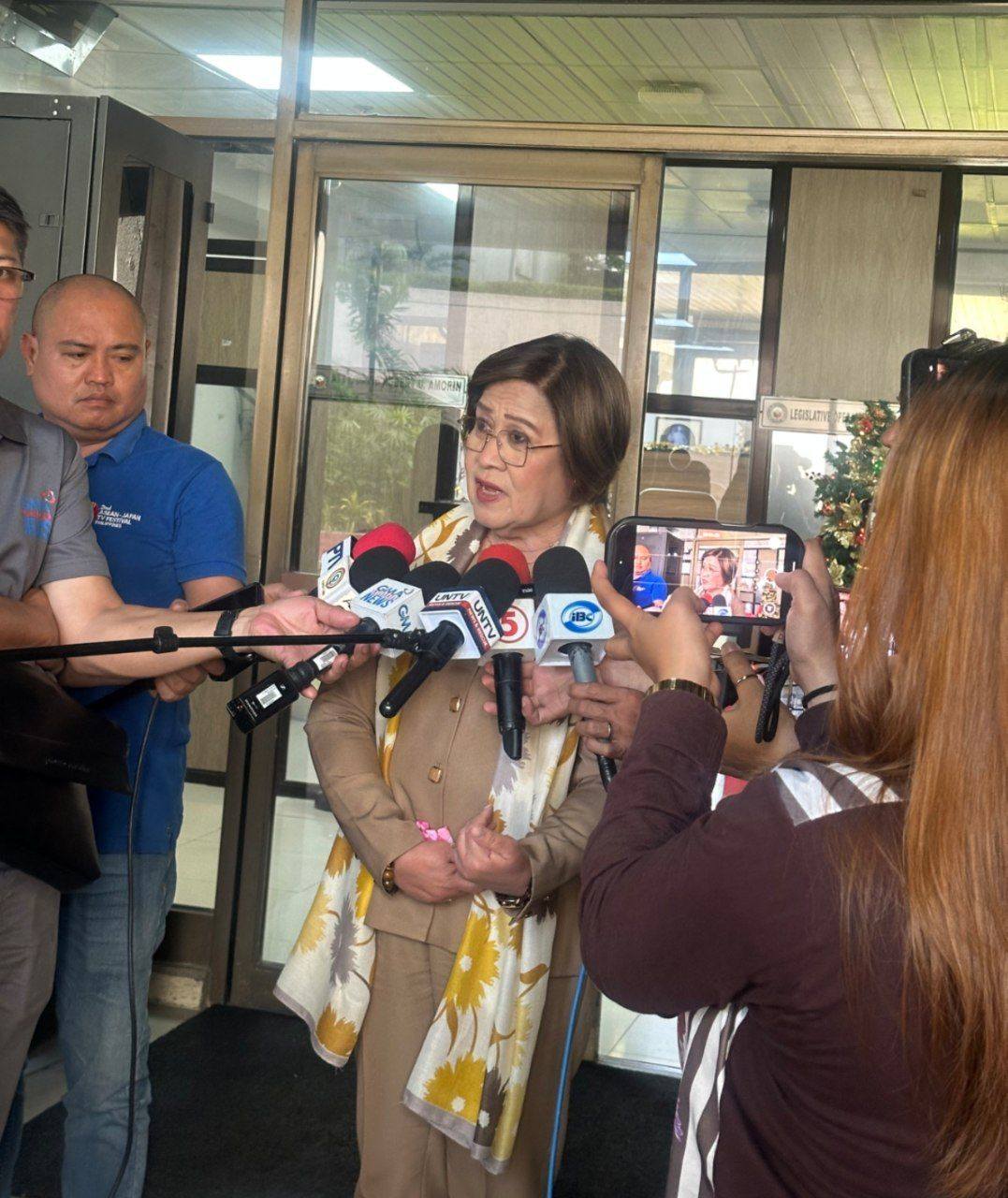
CITING the growing difficulty of securing convictions for plunder under existing laws and prevailing court rulings, House Deputy Minority Leader and Mamamayang Liberal (ML) Party-list Rep. Leila M. de Lima has filed a measure seeking to criminalize illicit enrichment and illicit transfer as a stronger tool against corruption and to bolster accountability in public office.
Under De Lima’s House Bill No. 6626 or the “Anti-Illicit Enrichment and Anti-Illicit Transfer Act”, a new section, “Illicit Enrichment and Illicit Transfer” shall be added to Chapter Two (Malfeasance and Misfeasance in Office), Title Seven (Crimes Committed by Public Officers), Book II of Republic Act No. 3815 or the “Revised Penal Code”.
“In light of the serious observations about, and criticisms against the Plunder Law and the court decisions interpreting it – coupled with the view that charges for malversation, bribery, graft and corruption may not be enough given the magnitude of wrongdoings in the biggest corruption scandal in Philippine history – there is a need to come up with a new, effective legal tool to put an end to corruption and hold all those involved accountable,” De Lima pointed out.
“Isipin po ninyo: Iilan lang ang na-convict ng plunder, may isa pang na-pardon.
Sa napakalaking corruption scandal gaya ng flood control projects controversy ngayon, na maaari pang maulit sa hinaharap, hindi tama at hindi makatwirang pahirapan pa ring mapanagot ang mga sangkot, o hindi kasing-bigat ng kanilang kalokohan ang ikakaso laban sa kanila. Kaya dito po natin naisip itong panukalang batas na ito, isang bagong krimen —paghahain ng mabigat na kaso na may mabigat ding parusa parang sa plunder, pero mas madaling patunayan. ”
“This bill does away with the ‘difficulties’ in the plunder law; mas madali itong patunayan. Kung may nadiskubre halimbawa ang Ombudsman sa lifestyle check nila na lote, yate, bahay, condo, helicopter, shares of stock o business na wala sa SALN ng government official, at hindi ito maipaliwanag, maituturing na yun as illicit enrichment. Kung ang evidence of guilt is strong, at ang illicit enrichment ay sobra sa P50 million, non-bailable din ang kaso gaya sa plunder,” she added.
According to De Lima, many countries are already implementing this legislation, and international studies attest to its effectiveness as a straightforward yet effective tool to combat corruption.
State Parties, including the Philippines, have committed to consider criminalizing illicit of enrichment under the UN Convention Against Corruption (UNCAC).
Illicit enrichment is the acquisition of unexplained wealth by a public official or employee, which is grossly disproportionate to his or her lawful income and other legitimately acquired property.
In this proposed measure, the related offense of “illicit transfer” is also defined and criminalized, whereby any public officer or employee who transfers or conveys an illicitly acquired property will be penalized.
If enacted into law, any public officer or employee who is guilty of illicit enrichment shall suffer the following penalties:
Arresto mayor in its maximum period to prision mayor in its maximum period (6 months to 12 years imprisonment) if the illicit enrichment amounts to not more than Ten million pesos (P10,000,000.00);
2. Prision mayor in its maximum period to reclusion temporal in its minimum period (12 years and one day to 14 years and 18 months imprisonment) if the illicit enrichment amounts to more than Ten million pesos (P10,000,000.00) but not more than Twenty million pesos (P20,000,000.00);
3. Reclusion temporal in its minimum period to reclusion temporal in its maximum period (14 years, 8 months and one day to 20 years imprisonment) if the illicit enrichment amounts to more than Twenty million pesos (P20,000,000.00) but not more than Fifty million pesos (P50,000,000.00); and
4. Reclusion perpetua in its minimum period to reclusion perpetua in its maximum period (20 years and one day to 40 years imprisonment) if the illicit enrichment exceeds Fifty million pesos (P50,000,000.00).
If this bill is enacted into law, any person found guilty of illicit enrichment, regardless of the amount of the ill-gotten wealth, shall suffer the accessory penalty of absolute perpetual disqualification.
Likewise, any public officer or employee who shall transfer or convey any illicitly acquired property shall be punished with prision correccional in its maximum period, or a fine not exceeding One hundred thousand pesos (P100,000.00), or both such imprisonment and fine. The same penalty shall be imposed upon any person who shall knowingly accept such transfer or conveyance.
Any asset, property business enterprise and/or material possession found to have been illicitly acquired shall be forfeited in favor of the State in case of conviction.
In addition, the government’s right to file illicit enrichment cases does not prescribe, nor is it susceptible to laches or estoppel.
“Given the magnitude of corruption we are facing today, the enactment of this crucial measure is timely and necessary. Malinaw po: Kung nagagawang paikutan ang batas o gamitin ang butas ng batas para makatakas sa pananagutan, kailangan natin itong tapatan ng mas epektibong batas,” the Bicolana lawmaker said.
“Patatagin natin ang ating mga institusyon. Paigtingin natin ang ating mga batas. Palakasin pa natin ang panawagan para ipakulong lahat ng kurakot—gaano man kataas ang posisyon o kapangyarihan—at bawiin ang mga nakaw na yaman,” she added
About the Author