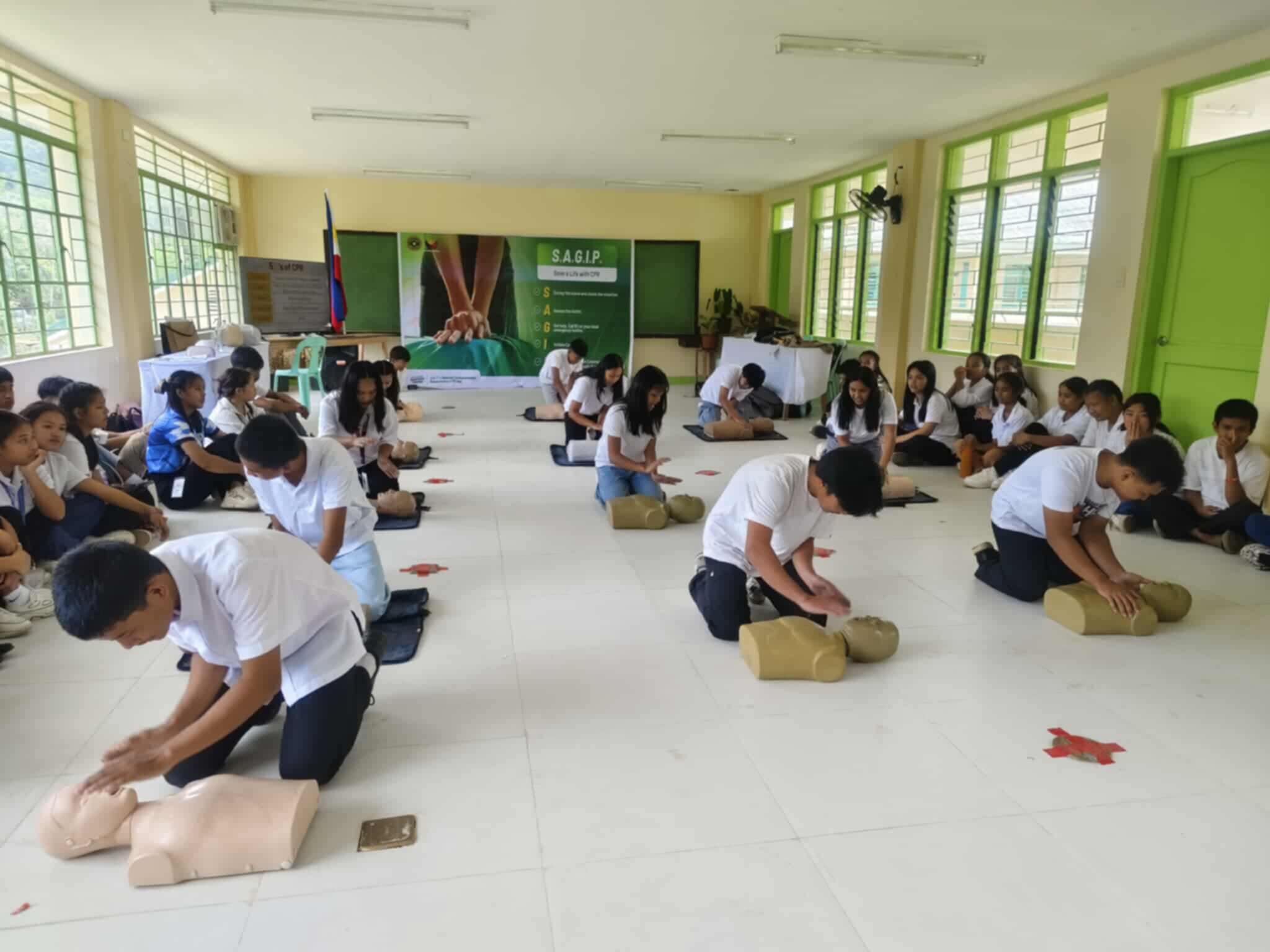
THE Department of Health (DOH) – Ilocos Region conducted a region-wide simultaneous mass cardiopulmonary resuscitation (CPR) Demonstration and Training for students to improve emergency preparedness and public health outcomes, and to raise awareness and boost life-saving skills among the youth in Pangasinan, La Union, Ilocos Sur, and Ilocos Norte on July 17, 2025 in commemoration of National CPR Day.
The activity, known as S.A.G.I.P. Program (S – Survey the scene and check the situation; A – Assess the victim; G – Get help, Call 911 or your local emergency hotline; I – Initiate chest compressions; P – Place Automated External Defibrillator (AED) pads if available), encompasses various health initiatives aimed at ensuring safety and emergency preparedness and one key component is CPR training for students, to promote first aid education in schools.
Regional Director Paula Paz M. Sydiongco said that the initiative brought together hundreds of students who were trained simultaneously in proper CPR techniques, reinforcing the importance of early intervention in cardiac emergencies.
“This is more than just a training—it’s a movement. By teaching students how to perform proper hands-only CPR, we are building a generation of first responders. Every student trained today is a potential lifesaver tomorrow,” she stated.
“Sudden cardiac arrest can strike anyone, anywhere, at any time, and often occurs outside hospitals, where immediate help is crucial. And a CPR, administered within the first few minutes can double or triple the survival rate of an individual.”
The mass demonstration was led by certified CPR instructors from our health emergency management service and regional hospitals, supported by the Department of Education and partner organizations.
Live demonstration of hands-only CPR, real-time instruction, and engagement via physical attendance were conducted.
The DOH emphasized that this initiative is part of a broader strategy to integrate hands-only CPR training into school curricula and to meet long-term public health and safety goals.
“Equipping students with CPR skills is as essential as empowering them to save lives during an emergency.”
Sydiongco encouraged schools in the region to include CPR as a required component of their health education programs.
“Parents, educators, and communities are also encouraged to advocate for continued support and expansion of CPR training for all our youth,” she concluded.
About the Author