SEVERAL lawmakers during the seventh and final hearing of the House Committee on Good Government and Public Accountability on the alleged misuse of confidential funds by the Office of the Vice President (OVP) and the Department of Education (DepEd) unveiled a comprehensive list of potential crimes committed by VP Sara Duterte’s trusted officials.
During the hearing, three lawmakers — Assistant Majority Leader and Ako Bicol Party-list Rep. Jil Bongalon, Batangas Rep. Gerville “Jinky Bitricks” Luistro and Surigao del Sur Rep. Johnny Pimentel — enumerated offenses ranging from plunder and malversation to falsification, bribery and perjury, highlighting the scale of corruption uncovered in the investigation.
Bongalon stressed the gravity of the crimes committed, starting with technical malversation under the Revised Penal Code.
“Simply stated, it means that an accountable officer applies public funds to another purpose. Kahit public purpose pa ‘yan, which is different from which they were originally appropriated for by law or ordinance. Sa madaling salita, ginamit sa iba ang pera ng taumbayan,” he explained.
He also warned that penalties for this offense include imprisonment of six years and one day to 12 years.
According to Bongalon, the law presumes malversation if an accountable officer cannot explain where the public funds under their care went.
“Kapag hinanap sayo kung nasaan ‘yung funds or nasaan napunta at wala kang masagot, the law presumes na binulsa mo,” he added.
The investigation revealed that Special Disbursing Officers (SDOs) Gina Acosta of the OVP and Edward Fajarda of DepEd handled millions in confidential funds without clear documentation.
Acosta encashed P125 million per quarter for three quarters in 2022-2023, while Fajarda encashed P37.5 million quarterly for three quarters in 2023. Both SDOs admitted they handed the funds to security officers without knowing how the money was spent or who received it, directly violating Commission on Audit-Department of Budget and Management Joint Circular No. 2015-001.
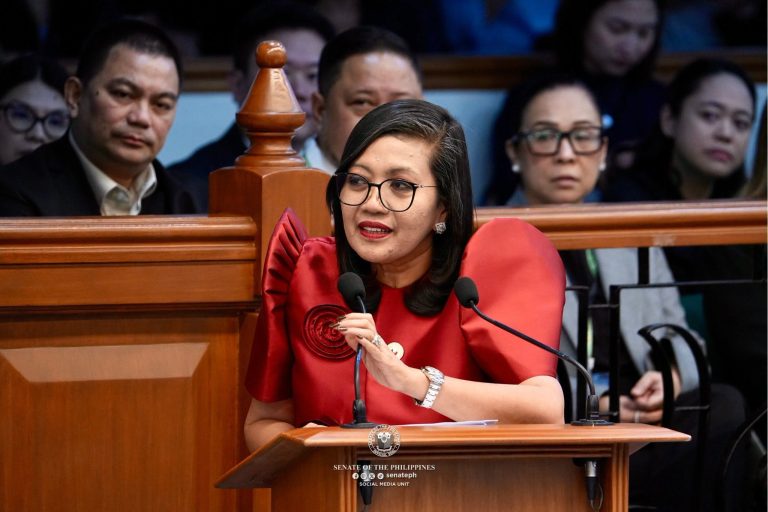
Luistro said that while the hearings of the panel were undertaken in aid of legislation, the lawmakers cannot turn a blind eye on the violations of law committed.
“I just want to reiterate that … our ultimate objective here in conducting this inquiry in aid of legislation is to be able to enhance existing laws, come up with new ones, if the needs are determined,” Luistro said. “Nevertheless, we cannot brush aside certainly all the abuses and infractions that we have identified during the course of our inquiry in aid of legislation.”
“In addition to the offenses raised already by our esteemed colleagues, I wish to add perjury,” she said.
She said perjury can be committed orally or in writing. One prime example of committing the crime orally is misrepresentations during inquiries in aid of legislation.
She said resource persons in the hearings of the Blue Ribbon panel were placed under oath.
“And ang lahat ng pagsisinungaling while under oath, we call it perjury.”
Luistro explained the elements of written perjury, citing the certifications submitted by the SDOs to the Commission on Audit (COA) regarding the liquidation of confidential funds.
She said the SDOs signed a certification submitted to the COA, duly notarized, for the P125 million confidential funds when they said they did not know where the funds went.
Luistro also raised the issue of bribery, explaining its elements and pointing out that the public officials involved could be liable for accepting bribes in exchange for illegal acts.
“Malamang, lahat ng mga tao na naimbestigahan natin ay public officials who received amounts of not just any money, but possibly of confidential funds, as well,” she said.
She added that those who offered bribes could also be held accountable for corruption of public officers under Article 212 of the Revised Penal Code.
Luistro also said the officers involved can be charged with the crime of plunder if they continue to fail to explain where some P612.5 million in confidential funds went.
Pimentel delved into the falsification of public documents, outlining its elements and penalties.
“Ang falsification po ay when public officers, tulad po ng ating mga resource persons na naimbita noong nakaraang mga hearing, take advantage of their positions and falsified documents,” he stated.
He cited the cases of Mary Grace Piattos and Kokoy Villamin as examples, saying, “Clearly, Mr. Chair, this is falsification.”
Pimentel further explained the use of falsified documents, where public officials knowingly utilized fraudulent records to justify their actions
About the Author