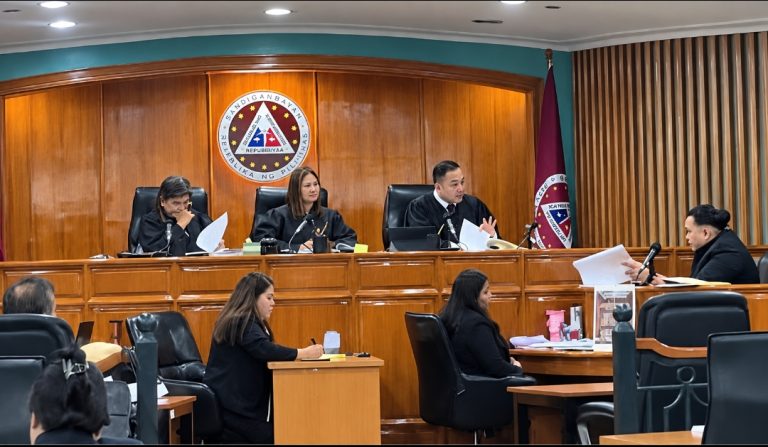
FOR the first time since 1989, the House Committee on Labor and Employment on Thursday formally heard proposals to abolish the provincial wage rate system—an action Kamanggagawa Partylist Rep. Elijah “Eli” San Fernando hailed as a “historic and long-overdue step toward wage justice.”
House Bill No. 94, San Fernando’s National Minimum Wage Act, was formally taken up alongside similar measures, 36 years after the passage of the Wage Rationalization Act which institutionalized region-based wages across the country.
“Makasaysayan ang araw na ito,” San Fernando said in his sponsorship speech. “Tatlumput-anim (36) na taon po itong inantay ng mga manggagawa at ordinaryong Pilipino.”
He underscored a simple but powerful question at the heart of the reform: “Paano natin maipapaliwanag na magkaiba ang sahod ng manggagawa base lang sa lugar kung saan sila nakatira at nagtatrabaho kahit na pareho naman ang kanilang ginagawa?”
San Fernando underscored what he called the “sheer absurdity” of the current wage system, noting that workers across regions have identical work, identical hours, identical effort, yet receive vastly different pay.
“Ang fast food crew at mga waiter sa Cebu ay parehas ng ginagawa sa mga manggagawa ng Jollibee dito sa Quezon City. Ang mga construction worker sa Bulacan at Pampanga ay parehas ang bigat ng trabaho at pagod sa mga construction worker sa Makati,” he argued.
“Pero bakit kahit parehas ang pagod at oras ng trabaho, magkakaiba ang sahod?” he asked. “Mas mabigat ba ang isang sakong semento sa probinsya kaysa sa Maynila? Mas matagal bang lutuin ang chicken joy sa Muntinlupa kumpara sa chicken joy sa San Pedro, Laguna?”
San Fernando stressed that the cost-of-living argument no longer holds: “Prices of major basic commodities in the regions are almost the same as the prices in Metro Manila. In many instances, mas mahal pa ang bilihin sa probinsya dahil sa dagdag na transportation cost.”
The Kamanggagawa representative directly challenged the Marcos Jr. administration to show sincerity to workers: “If the administration truly wants to regain the trust of workers and ordinary Filipinos, ngayon ang tamang panahon. Abutin na natin ang katarungang matagal nang ipinagkait sa manggagawa.”
“It is simply unacceptable that in 2025, there are still workers earning as low as ₱300 a day. Hindi na natin puwedeng ipagpatuloy ang ganitong kawalan ng dignidad,” he said.
“The Constitution guarantees every worker a living wage. Hindi nito sinabing depende kung taga-saan ka,” San Fernando emphasized.
Following the deliberations, the Committee on Labor and Employment announced that House Bill No. 94 will be consolidated with similar measures filed by Reps. Adrian E. Salceda, Josefina B. Tallado, Ramon N. Guico Jr., and Ramon Jolo B. Revilla III.
The committee will draft a unified substitute bill, which is set for discussion and approval on December 10, a decisive next step in the long struggle to reform the country’s wage system and end decades of legalized wage inequality.
San Fernando reaffirmed his commitment to see the measure through to its passage: “We vow to fight until this bill becomes law. The second class treatment of provincial workers must come to an end.”
About the Author